

 English
 Español
 Français
ADDRESS
- Zicun, Chongfu Town, Tongxiang City, Zhejiang Province, China.
CONTACT
- Tel: +0086-13857379100
- Fax: +0086-0573-89372132
- Email: [email protected]
 2026-02-24
 Industry news
In the realm of high-end garment construction, the internal architecture of a suit is just as critical as its exterior drape. Yarn-dyed Sleeve Lining Fabrics represent the pinnacle of interior textile engineering, offering a blend of aesthetic sophistication and functional durability. Unlike piece-dyed alternatives, these fabrics are woven from yarns that have been colored before the weaving process, resulting in superior color depth and structural integrity. For premium menswear and high-performance outerwear, selecting the right Yarn-dyed Sleeve Lining Fabrics is essential for ensuring comfort and longevity.
The fundamental difference between these two categories lies in the stage of the coloration process. Yarn-dyed vs piece-dyed lining performance differs significantly in terms of colorfastness and tactile friction. Piece-dyed fabrics are woven as greige goods and submerged in dye vats, which can sometimes lead to uneven penetration in high-density weaves. Conversely, Yarn-dyed Sleeve Lining Fabrics utilize pre-colored filaments, ensuring that the hue is locked into the core of every fiber. This method prevents the "fading" commonly seen at high-friction points such as the elbows and armholes.
| Feature | Piece-dyed Lining | Yarn-dyed Lining |
| Color Penetration | Surface-level coating | Deep fiber-core saturation |
| Visual Pattern | Solid or printed | Woven-in stripes or textures |
| Fabric Hand | Standard smoothness | Enhanced silk-like crispness |
Modern sleeve linings frequently employ a blend of viscose, acetate, or cupro to facilitate ease of movement. A significant technical challenge in lining fabrics for tailored jackets is the accumulation of static electricity. High-density Yarn-dyed Sleeve Lining Fabrics are often engineered with specific conductive filaments or finished with advanced anti-static agents. This is crucial for anti-static sleeve lining for suits, as it prevents the sleeve from clinging to the shirt, thereby reducing "rinding up" nd maintaining a clean silhouette. Engineers prioritize cupro blends in yarn-dyed formats because the molecular structure of the yarn allows for better moisture regain than standard polyester.
| Material Type | Static Generation | Moisture Regain (%) |
| Standard Polyester | High | 0.4% |
| Viscose/Rayon | Moderate | 11.0% - 13.0% |
| Yarn-dyed Sleeve Lining Fabrics (Cupro) | Low | 11.0% |
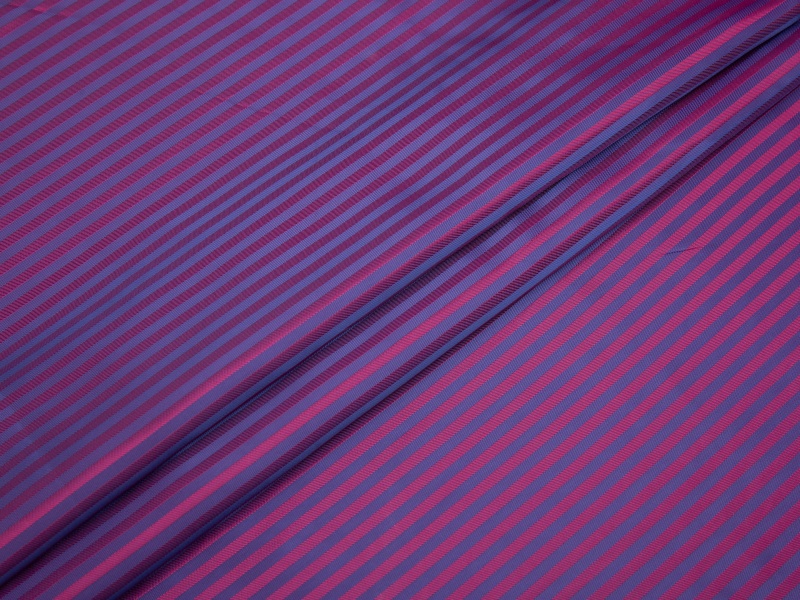
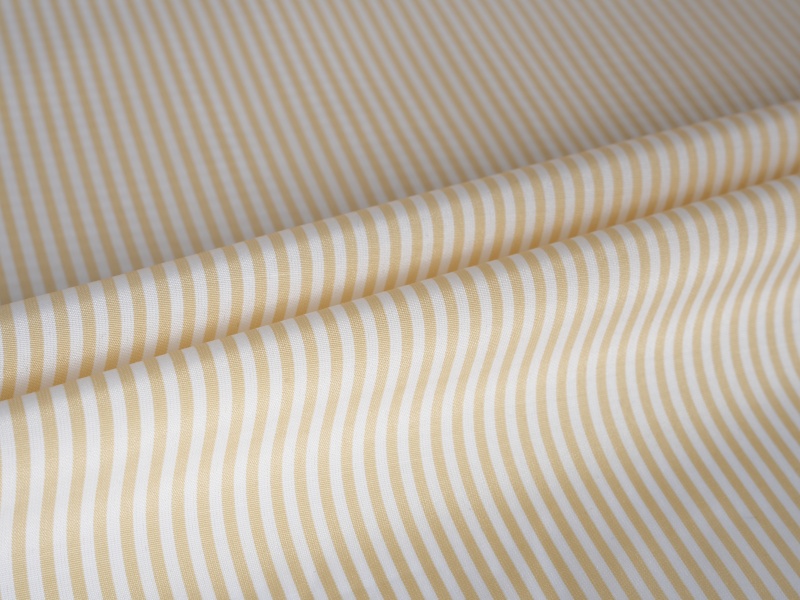
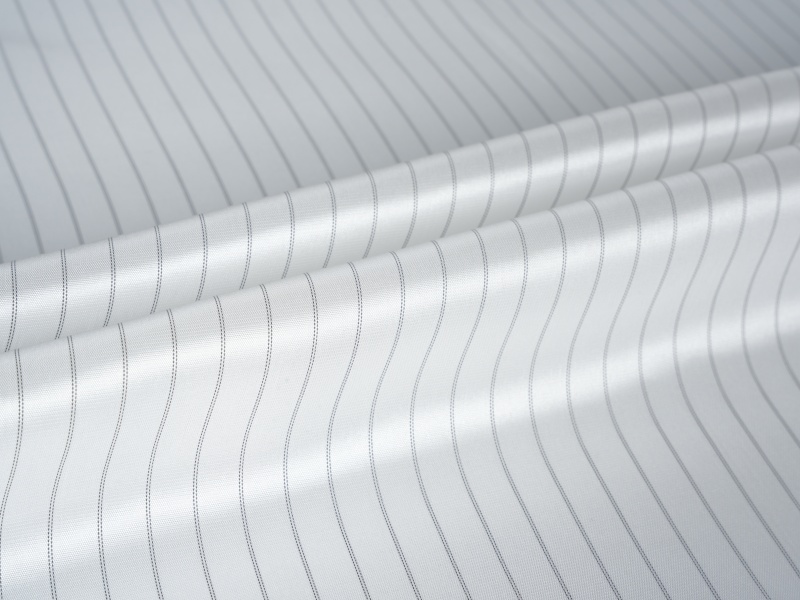
The sleeve lining is subjected to the highest mechanical stress within a garment. Durability of yarn-dyed lining in coats is a result of the weaving tension and yarn twist. By using yarn-dyed techniques, manufacturers can use multi-colored yarns to create intricate striped yarn-dyed sleeve lining patterns that do not compromise the weave's density. These stripes are not printed but are part of the structural lattice, providing a smoother surface that facilitates the arm sliding in and out of the jacket. When considering how to choose high-quality suit lining, the thread count and the "slip resistance" of the seam are the primary indicators of a professional-grade product.
An often-overlooked aspect of Yarn-dyed Sleeve Lining Fabrics is their contribution to the microclimate within the sleeve. Breathable sleeve lining for luxury outerwear must allow for the transmission of water vapor while providing enough wind resistance to maintain core temperature. Because yarn-dyed fabrics avoid the "cogging" effect of heavy surface dyes used in piece-dyeing, the interstices between the warp and weft remain more open, promoting air permeability. This makes striped yarn-dyed sleeve lining a preferred choice for summer suit lining options where weight reduction and airflow are paramount.
| Environmental Condition | Polyester Piece-dyed | Viscose Yarn-dyed |
| High Humidity | Clammy/Sticky hand-feel | Dry/Cool hand-feel |
| Winter/Cold | Cold to the touch | Rapidly reaches skin temperature |
As the industry moves toward sustainable yarn-dyed lining production, engineers are focusing on reduced water consumption. Piece-dyeing requires massive quantities of water for rinsing out unabsorbed dyes. In contrast, Yarn-dyed Sleeve Lining Fabrics can utilize " dope-dyeing" or"ddope-dyeing where pigment is added to the liquid polymer before the fiber is even extruded. This eliminates the traditional dye bath. For designers, custom patterns for yarn-dyed sleeve fabrics can now be achieved using recycled fibers, ensuring that the "hidden luxury" of the lining also carries an eco-friendly certification.
The cost is higher due to the complex logistics of coloring yarns before weaving, the requirement for higher-quality raw filaments to survive the dyeing tension, and the slower weaving speeds needed for intricate patterns.
Yes, especially when made from Bemberg or Viscose. These materials are highly breathable and possess a cool touch, making them much more comfortable than synthetic piece-dyed linings in warm weather.
Absolutely. High-quality yarn-dyed linings use hydrophilic fibers that retain a microscopic layer of moisture, which dissipates static charges, or they incorporate conductive carbon-core yarns during the weaving process.
Look for a smooth, "cool" touch and a high thread count. If the pattern (like a stripe) is visible on both the front and back of the fabric with equal clarity, it is likely a high-quality yarn-dyed material.
Yes. Because the color is part of the fiber and the weave density is usually higher than budget linings, it resists abrasion and pilling much more effectively over the years of wear.
Copyright © Tongxiang Shunli Textile Technology Co., Ltd. All Rights Reserved.Custom Clothing Lining Fabrics Manufacturers
