

 English
 Español
 Français
ADDRESS
- Zicun, Chongfu Town, Tongxiang City, Zhejiang Province, China.
CONTACT
- Tel: +0086-13857379100
- Fax: +0086-0573-89372132
- Email: [email protected]
 2026-09-24
 Industry news
A well-made garment is judged as much by its inside as by its outside. The lining is the first fabric the wearer feels, and it determines whether a jacket glides on, drapes comfortably, and holds its structure through years of use. Natural silk lining has long been regarded as the ultimate inner fabric for luxury tailoring, while high-density polyester jacquard lining has become the engineering choice for modern apparel production. For clothing manufacturers and brands, the choice between the two directly affects product cost, customer satisfaction, and after-sales performance.
This article compares high-density polyester jacquard lining with natural silk lining across three decisive dimensions: cost, maintenance, and abrasion resistance. We also consider hand feel, moisture behavior, and the garment types each fabric suits best.
Natural silk lining is expensive before it ever reaches a weaving loom. Silk fiber comes from silkworm cocoons, and each stage of sericulture, reeling, and throwing requires skilled labor. The yield per cocoon is low, the fiber is delicate to process, and silk yarn prices remain consistently higher than most man-made filaments. When silk is woven into a jacquard pattern, the slower production speed adds further cost. For a garment manufacturer, the lining can become one of the most expensive single components in the bill of materials.
High-density polyester jacquard lining starts from polyester filament yarn with a stable and mature supply chain. Because the yarn is uniform and the weaving process can run at higher speeds, the per-meter cost stays far below silk. The high-density construction still delivers a smooth, compact surface with good drape, which makes it suitable for the same tailored garment categories at a fraction of the material cost.
Unit price is only one part of the total cost picture. A lining that pills, frays, or catches static can generate returns and complaints that erase the initial saving. Polyester jacquard lining keeps its appearance through repeated use and cleaning, which lowers the total cost of ownership for brands that stand behind their products.
For manufacturers producing suits, jackets, and leather garments in volume, our high-density polyester jacquard lining fabric is engineered to balance cost control with consistent quality.
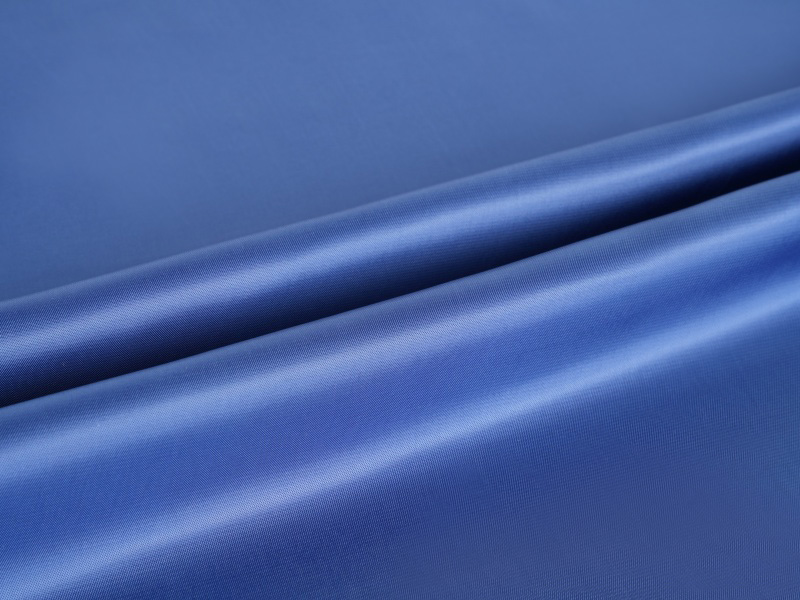
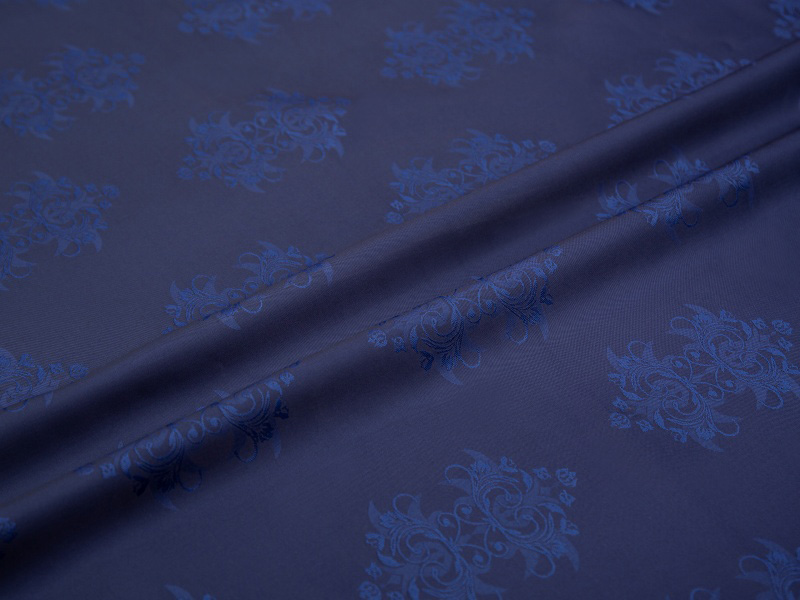
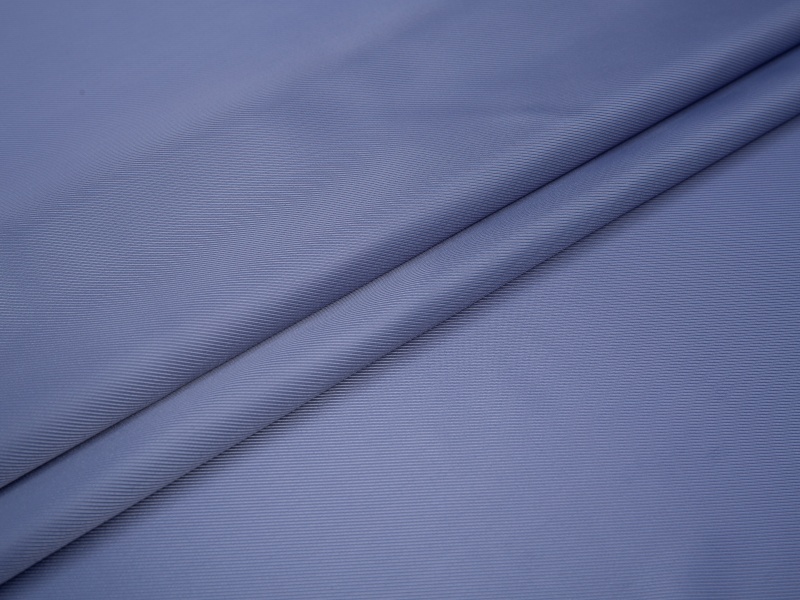
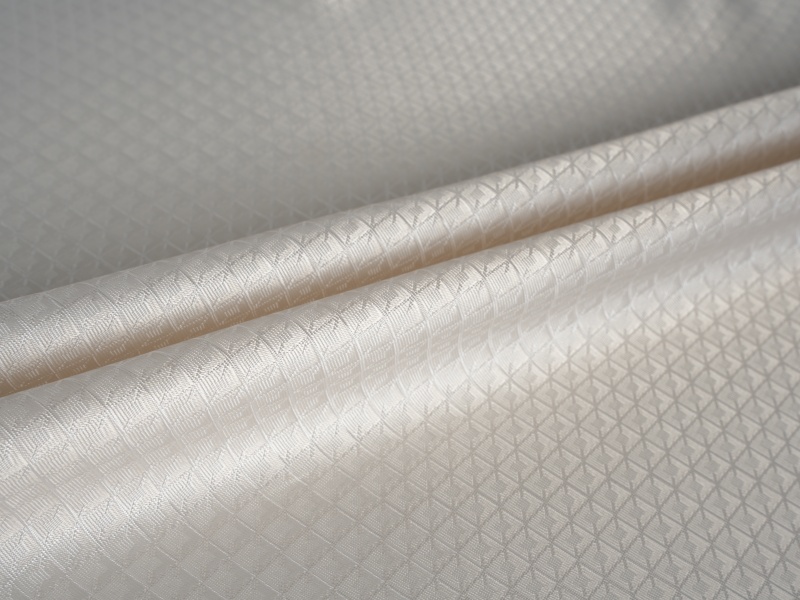 Polyester Jacquard Lining Fabric for Durable WearThis polyester jacquard lining offers precise pattern detailing and antistatic properties. It resists weakening from perspiration and sunlight, unlike silk, and remains washable while keeping colors and patterns intact.View Product →
Silk is a protein fiber, and protein fibers are sensitive. Alkaline detergents, perspiration, and long exposure to sunlight can weaken silk filaments. Most garments with natural silk lining are labeled for professional dry-cleaning only. Even careful dry-cleaning gradually affects the luster; over time, the silk surface may become dull, and the edges may fray where the lining rubs against the body. In humid climates, silk can absorb moisture and lose the crisp, smooth feel that made it attractive in the first place.
High-density polyester jacquard lining behaves differently. Polyester has low moisture absorption, so it resists water-based stains and dries quickly. It tolerates a wider range of cleaning methods and detergents, which makes it easier for end consumers to care for their garments. The high-density weave keeps the yarns locked in place, so the lining does not loosen, shrink, or distort after repeated cleaning.
For brands, easy maintenance also means fewer customer complaints and lower warranty risk. A suit lining that can survive normal care routines without special instructions is a practical advantage, especially in markets where professional dry-cleaning is expensive or not always available.
There is also a middle option. Polyester-viscose jacquard lining combines the strength of polyester with the soft, natural touch of viscose. It delivers a silk-like hand feel with a care profile that is far more forgiving than pure silk.
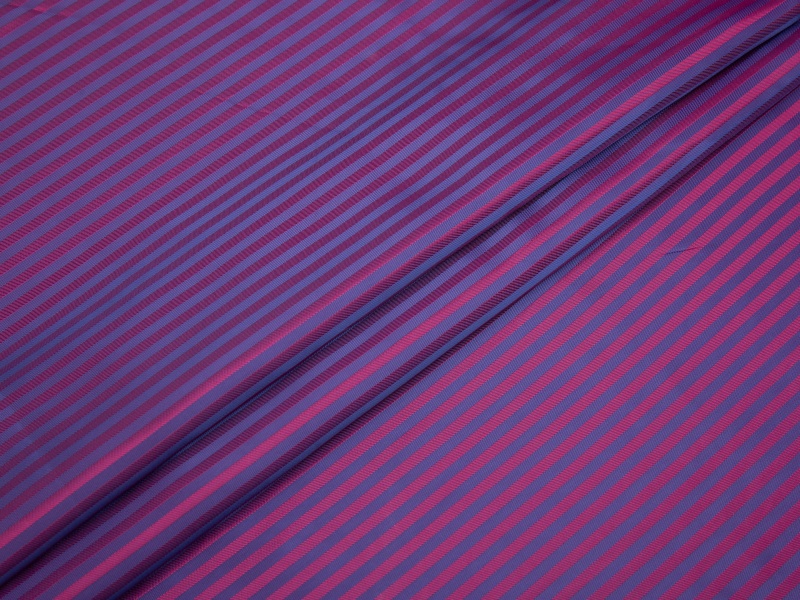
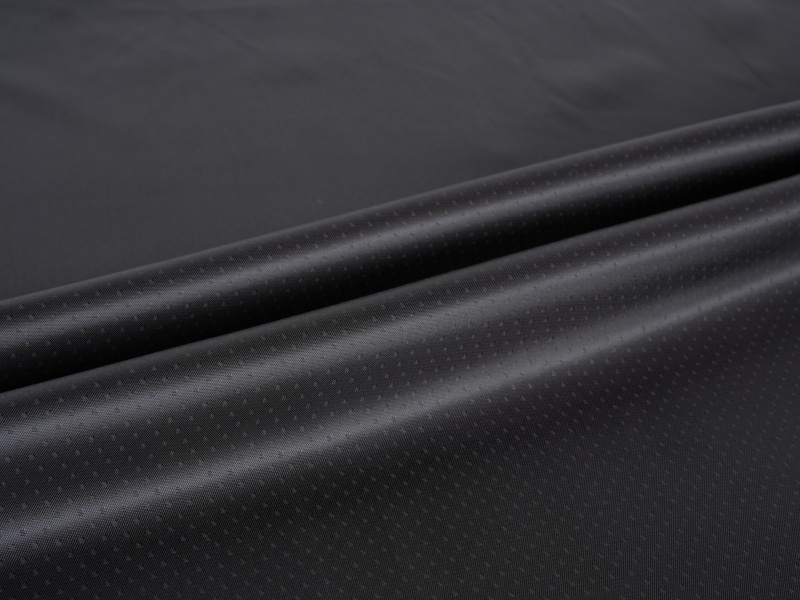 Polyester Viscose Jacquard Lining with Soft TouchThis lining blends polyester's strength with viscose's softness, providing a silk-like feel and breathability. Its antistatic treatment and eco-friendly dyeing suit warm climates, offering a practical middle option between pure silk and standard polyester.View Product →
Abrasion resistance is the unsung hero of lining performance. Every time a wearer puts on a jacket, raises an arm, sits down, or carries a bag, the lining is pressed and rubbed against the outer fabric. Over months of wear, the inner surface of the sleeves, the shoulder area, and the seat of skirts or trousers takes the heaviest punishment.
Silk fibers are strong in a straight pull, but their abrasion resistance decreases when the fiber surface is repeatedly rubbed. The fine filaments can fibrillate, meaning they begin to split and create fuzz. On a frequently worn jacket, silk lining may show pilling along the sleeve edges or a general thinning of the fabric in high-friction zones. This wear is often invisible at first and appears only after months of use.
High-density polyester jacquard lining is built to withstand this kind of friction. A high yarn count produces a tight, even surface with limited movement between yarns, which reduces snagging and pilling. Polyester filaments also have good elastic recovery, so the fabric returns to shape after being stretched. The result is a lining that maintains its smooth appearance across many wear cycles.
Jacquard patterns do not reduce abrasion performance when the density is high. On the contrary, the structured weave distributes stress more evenly and can make the lining feel more substantial. For outerwear, office uniforms, and garments worn on a daily basis, this durability is a decisive factor.
The table below summarizes how the two linings compare across the factors that matter most to manufacturers and buyers.
| Factor | High-Density Polyester Jacquard Lining | Natural Silk Lining |
|---|---|---|
| Unit cost | Low to medium | High |
| Maintenance | Easy, regular care tolerated | Delicate, dry-clean preferred |
| Abrasion resistance | Excellent | Moderate |
| Hand feel | Smooth and dry | Soft and luxurious |
| Moisture absorbency | Low | Good |
| Static tendency | Possible | Low |
| Pattern and color range | Wide | Limited by dyeing |
| Best application | Suits, jackets, leatherwear, uniforms | Exclusive tailoring |
Natural silk lining still has a place in exclusive tailoring. For high-end garments that are worn occasionally, handled carefully, and dry-cleaned professionally, silk offers unmatched softness and natural luster. It is the right choice when the lining itself is a selling point of the garment.
High-density polyester jacquard lining suits a broader production reality. It is ideal for garment lines that need consistent quality, predictable cost, and easy care, especially for suits, blazers, leather jackets, and workwear that must survive regular use. Its wide range of jacquard patterns also allows brands to add an internal design element without paying a silk-level premium.
To see how lining choices fit into a complete garment, read our clothing lining fabrics guide. The right lining is not simply the most expensive or the most durable; it is the one that matches the garment, the customer, and the way the product will actually be worn.
Silk has better natural moisture absorbency, so it can feel more comfortable in very hot weather. High-density polyester is less absorbent, but modern yarn structures can improve air circulation. For most suit and jacket applications, the comfort difference is small.
No. Natural silk should be professionally dry-cleaned. Machine washing can weaken the protein fibers, cause shrinkage, and dull the surface. Polyester jacquard lining is much more tolerant and can withstand regular care methods.
High-density polyester jacquard lining generally lasts longer for daily wear because of its abrasion resistance and stability during cleaning. Silk may wear at the cuffs, sleeves, and seat area after regular use.
No. When the weave density is high, the jacquard pattern actually helps distribute stress across the fabric. The durability depends on yarn quality and weave construction, not on the pattern itself.
Copyright © Tongxiang Shunli Textile Technology Co., Ltd. All Rights Reserved.Custom Clothing Lining Fabrics Manufacturers
