


 English
 Español
 Français
ADDRESS
- Zicun, Chongfu Town, Tongxiang City, Zhejiang Province, China.
CONTACT
- Tel: +0086-13857379100
- Fax: +0086-0573-89372132
- Email: [email protected]
 2026-04-09
 Industry news
Polyester twill lining fabric offers superior drape, softness, and wrinkle resistance compared to plain lining, making it ideal for high-end garments like suits and coats. Polyester plain lining fabric provides maximum structural stability, abrasion resistance, and cost-effectiveness, making it the preferred choice for everyday apparel, bags, and budget-conscious applications. The decision between these two weave structures should be based on your specific requirements for garment type, comfort level, durability needs, and budget constraints.
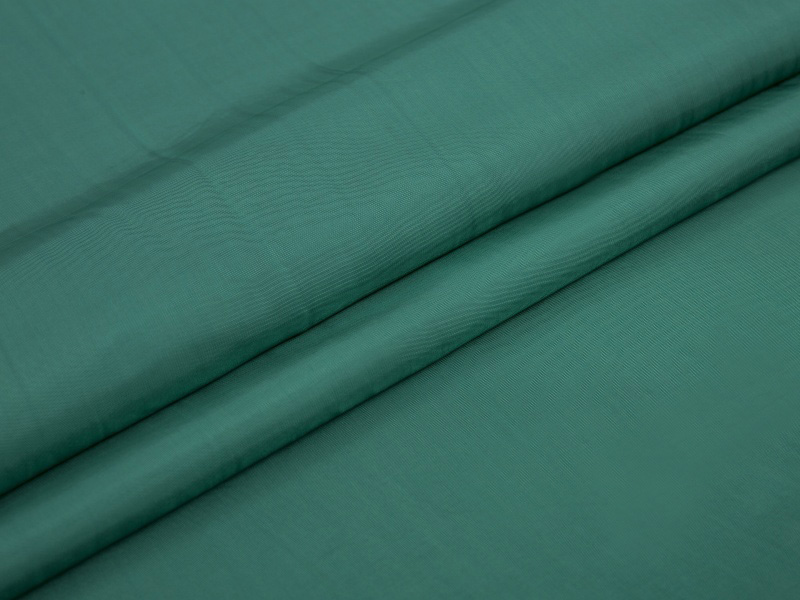
The fundamental distinction between polyester plain and twill lining fabrics lies in their interlacing patterns. Plain weave follows a simple one-over-one-under pattern where warp and weft yarns alternate at every intersection, creating a checkerboard-like surface with maximum interlacing points. This tight structure produces a flat, uniform fabric with excellent dimensional stability.
Twill weave, conversely, employs a diagonal pattern where weft threads pass over one or more warp threads and then under two or more, creating distinctive diagonal ribs or wales on the fabric surface. This staggered pattern results in fewer interlacing points, allowing yarns to be packed more tightly and creating a fabric with higher thread density and greater thickness than plain weave alternatives.
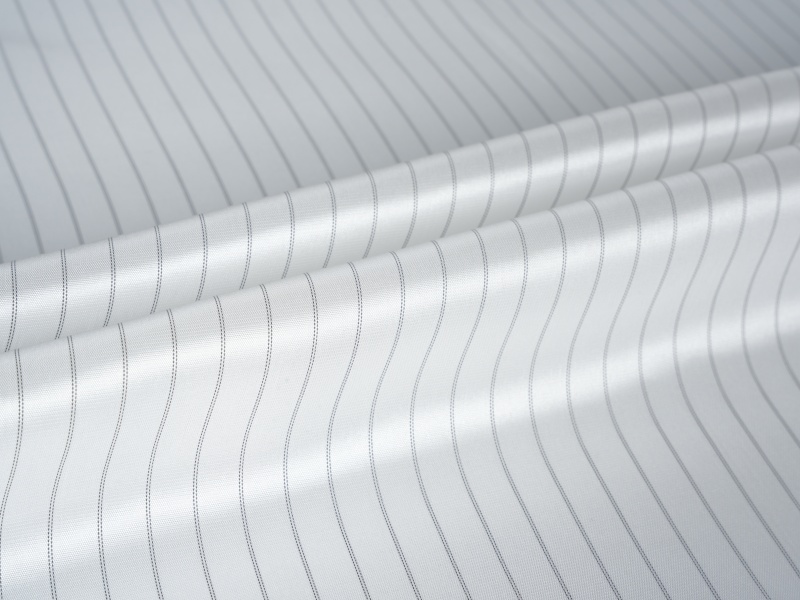
Polyester plain lining presents a smooth, flat appearance with identical front and back surfaces. The tight interlacing creates a firm hand-feel with minimal elasticity and lower natural luster. This makes plain lining particularly suitable for applications requiring crisp structure and minimal surface distraction.
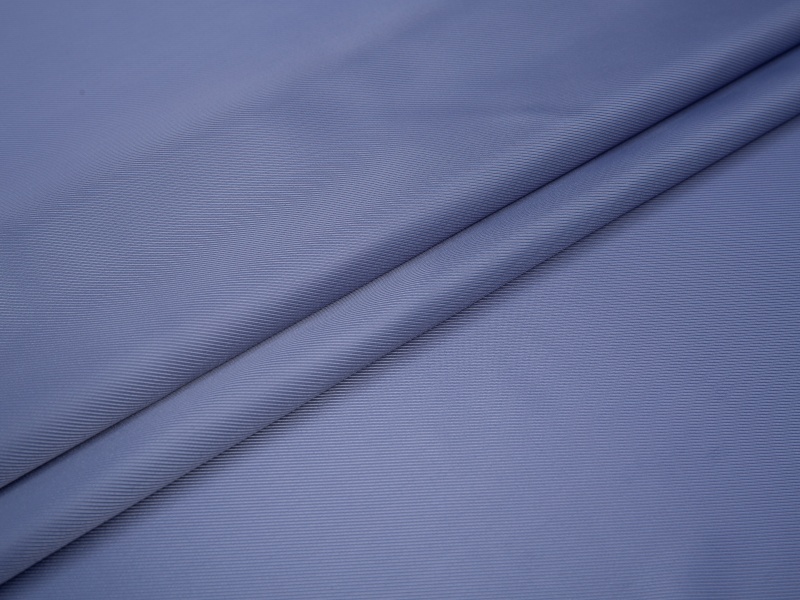
Polyester twill lining displays a pronounced diagonal texture that adds visual depth and a subtle sheen to the fabric surface. The longer yarn floats in twill construction allow fibers to move more freely, resulting in a softer, more supple hand-feel that drapes elegantly and conforms naturally to garment shapes. The diagonal pattern also provides superior soil and stain concealment compared to the flat surface of plain weave.
When evaluating mechanical performance, both weave structures offer distinct advantages. Plain weave demonstrates superior abrasion resistance due to its maximum interlacing density, making it highly resistant to surface wear and snagging. The symmetrical structure distributes stress evenly across both warp and weft directions, providing consistent strength characteristics.
Twill weave excels in tear strength and stress distribution. The diagonal interlacing pattern allows stress to disperse more effectively across the fabric structure, with tear strength measurements typically ranging between 19N and 30N compared to approximately 13N for plain weave alternatives. This makes twill lining particularly valuable for garments subjected to frequent movement and friction.
| Performance Metric | Plain Lining | Twill Lining |
|---|---|---|
| Tear Strength | Moderate (~13N) | High (19N-30N) |
| Abrasion Resistance | Excellent | Good |
| Wrinkle Recovery | Lower | Higher |
| Thread Density Potential | Moderate | High |
The functional differences between these lining types significantly impact wearer comfort. Polyester twill lining creates subtle micro-channels within the fabric structure through its diagonal yarn arrangement, enabling better air circulation and moisture wicking than the denser plain weave construction. This breathability advantage makes twill lining particularly suitable for spring and summer garments or activewear applications.
The drape characteristics of twill lining also contribute to enhanced comfort. The fabric naturally conforms to body contours without creating bulk or stiffness, allowing garments to move fluidly with the wearer. Plain lining, while offering excellent structural support, tends to be stiffer and less accommodating to complex curves, making it better suited for structured garments where shape retention takes priority over fluid movement.
Polyester plain lining fabrics typically range from 50 GSM to 120 GSM, with common specifications including 65 GSM, 80 GSM, and 90 GSM variants. These lighter weights make plain lining economical for high-volume applications while maintaining adequate coverage and protection.
Polyester twill lining generally requires higher GSM ranges, typically between 90 GSM and 140 GSM, to achieve optimal performance characteristics. The increased weight contributes to the fabric's luxurious hand-feel and improved opacity, making it particularly suitable for premium garment categories where perceived quality influences consumer satisfaction.
Selecting the appropriate lining type requires careful consideration of end-use requirements. Polyester plain lining excels in applications demanding maximum durability at minimal cost, including bag linings, everyday apparel, curtains, and basic home textiles. Its excellent dimensional stability and abrasion resistance make it the practical choice for items subjected to frequent handling or washing.
Polyester twill lining dominates in premium apparel segments where comfort and aesthetics take precedence. High-end suits, trench coats, blazers, and formal jackets benefit from twill lining's superior drape, softness, and wrinkle resistance. The diagonal texture adds subtle sophistication while the enhanced breathability improves wearing comfort during extended use.
The garment industry demonstrates clear preferences based on product positioning. Mass-market manufacturers typically specify plain lining for cost-sensitive categories, achieving unit costs that can be 15-20% lower than twill alternatives while maintaining acceptable performance standards. Premium and luxury brands consistently select twill lining for outerwear and formal collections, where the enhanced hand-feel and drape characteristics justify the additional material investment.
| Application Category | Recommended Lining | Rationale |
|---|---|---|
| Suits and Blazers | Twill | Superior drape and comfort |
| Bags and Luggage | Plain | Maximum abrasion resistance |
| Trench Coats | Twill | Wrinkle resistance and fluid movement |
| Basic Apparel | Plain | Cost-effectiveness and stability |
| Workwear and Uniforms | Twill | Durability with comfort |
Cost differential represents a significant factor in lining selection. Plain weave construction requires simpler manufacturing processes with fewer mechanical adjustments, resulting in lower production costs and shorter lead times. This cost advantage makes plain lining the default choice for high-volume, price-sensitive production runs.
Twill lining commands premium pricing due to more complex weaving requirements and typically higher GSM specifications. However, the additional investment often delivers measurable returns in product quality perception, customer satisfaction, and reduced returns related to comfort complaints. For premium brands, the cost differential typically represents less than 3% of total garment cost while significantly enhancing perceived value.
When evaluating polyester lining fabrics, procurement professionals should verify several quality metrics. For plain lining, assess yarn count consistency, absence of visible defects, and uniform dye penetration across the surface. Standard widths typically range from 57/58 inches to 60 inches, with common specifications including 150cm widths for Asian manufacturing.
For twill lining, additional evaluation criteria include diagonal pattern regularity, absence of skewing or distortion, and consistent wale definition across the full fabric width. High-quality twill lining should display uniform diagonal lines without interruption or variation in angle. The fabric should maintain structural integrity under tension without showing stress marks or distortion of the twill pattern.
Both polyester lining types benefit from the inherent advantages of polyester fiber, including excellent washability, rapid drying, and resistance to mildew and moths. However, weave structure influences specific care requirements. Plain lining's tight construction provides excellent dimensional stability during washing, with minimal shrinkage typically under 2% when processed according to standard protocols.
Twill lining requires slightly more attention to washing temperature and agitation levels to preserve the diagonal texture and prevent distortion of the wale pattern. While polyester's wrinkle resistance minimizes ironing requirements, twill lining's superior wrinkle recovery means it typically requires less pressing than plain alternatives to achieve a smooth, professional appearance after washing.
The optimal choice between polyester plain and twill lining depends on a weighted evaluation of garment requirements. For applications prioritizing structural stability, maximum abrasion resistance, and cost minimization, plain lining delivers superior value. For garments where comfort, drape quality, and premium perception drive purchasing decisions, twill lining provides compelling advantages that justify the incremental cost.
Manufacturers should consider conducting wear-testing with both lining types for new product categories, as the interaction between outer fabric weight, garment construction, and lining characteristics can produce unexpected results. Documented performance data specific to your product range will enable more precise material specifications and improved consistency in finished product quality.

Copyright © Tongxiang Shunli Textile Technology Co., Ltd. All Rights Reserved.Custom Clothing Lining Fabrics Manufacturers
