


 English
 Español
 Français
ADDRESS
- Zicun, Chongfu Town, Tongxiang City, Zhejiang Province, China.
CONTACT
- Tel: +0086-13857379100
- Fax: +0086-0573-89372132
- Email: [email protected]
 2026-04-03
 Industry news
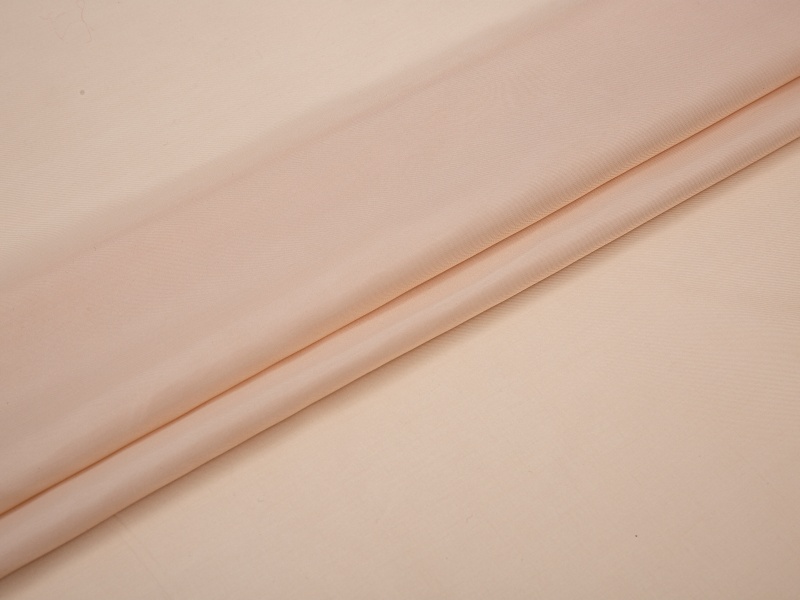
Polyester viscose lining fabric is a blended woven textile that combines two complementary fiber types — polyester and viscose (rayon) — to produce a lining material with a balance of performance properties that neither fiber delivers as effectively alone. The blend ratio is the primary variable that determines where the fabric sits on the spectrum between durability and drape, and most commercial lining fabrics in this category are produced at ratios of 65/35 or 52/48 polyester-to-viscose, though the specific blend depends on the end application and price point.
Polyester contributes dimensional stability, wrinkle resistance, abrasion resistance, and colorfastness. Viscose contributes softness against the skin, breathability, moisture absorption, and the fluid drape characteristic that makes a garment comfortable to put on and take off. In lining applications specifically — where the fabric sits between the outer shell and the wearer's body — both sets of properties matter simultaneously, which is why blended constructions dominate the market over single-fiber alternatives.
Pure polyester linings are serviceable but feel synthetic and warm against the skin, generating static electricity that causes garments to cling. Pure viscose linings drape beautifully but pill easily, lose strength when wet, and are prone to shrinkage if not preshrunk during finishing. The polyester-viscose blend resolves both sets of limitations, producing a lining that is smooth, breathable, dimensionally stable, and durable enough for commercial garment production — at a cost point accessible across tailoring and ready-to-wear price segments.
| Property | Polyester Contribution | Viscose Contribution |
|---|---|---|
| Durability | High abrasion and tear resistance | Moderate — improves with blend |
| Drape and handle | Adds body and recovery | Fluid, silky drape and soft hand |
| Moisture management | Low absorbency — wicks poorly | High absorbency — manages perspiration |
| Dimensional stability | Excellent — minimal shrinkage | Moderate — requires preshrinking |
| Static generation | High if unfinished | Low — antistatic naturally |
| Colorfastness | Excellent — disperse dye stability | Good with reactive dyes |
| Cost | Lower raw material cost | Moderate — higher than polyester |
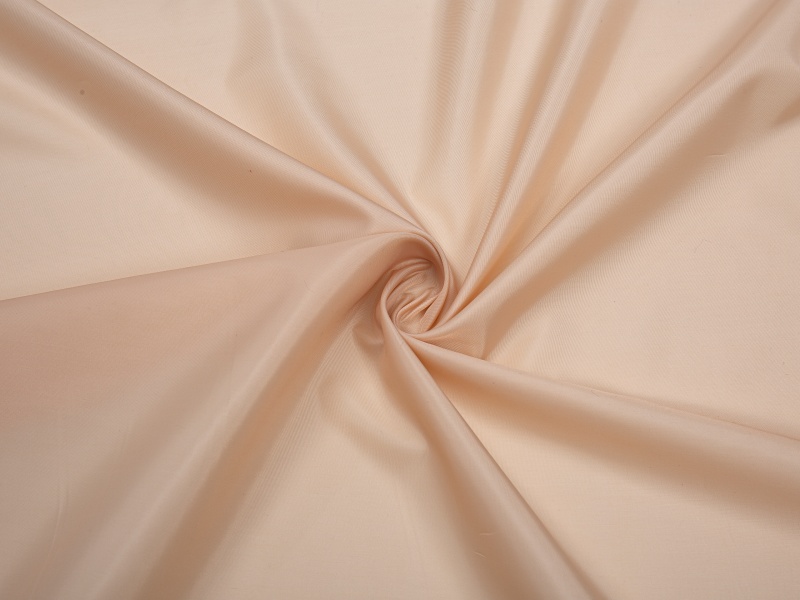
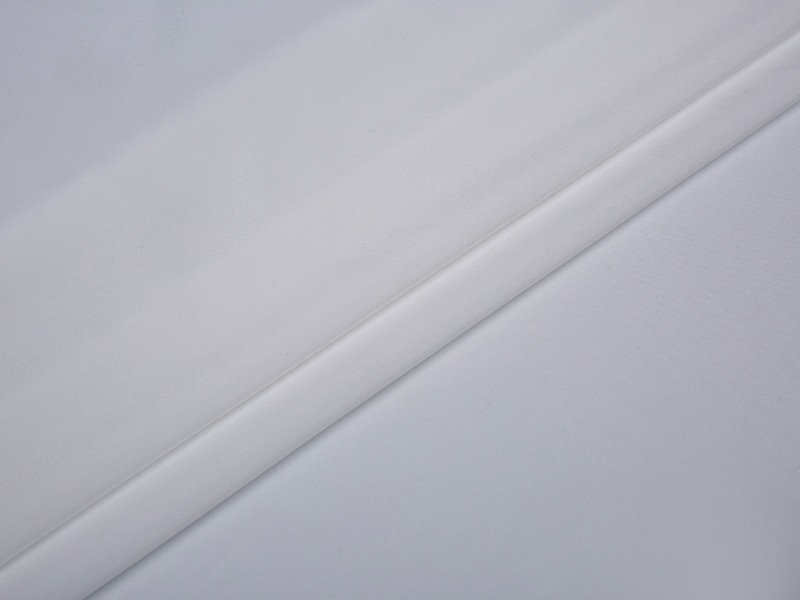
Plain weave is the simplest and most fundamental weave structure: each weft yarn passes alternately over and under each warp yarn, producing a symmetrical interlacing pattern with the highest number of interlacement points of any weave construction. In polyester viscose plain lining fabric, this dense interlacement produces a smooth, flat surface with uniform appearance on both faces — a characteristic that makes it the default choice for garment linings where a clean, neutral internal finish is required without surface pattern or texture.
The plain weave structure in polyester viscose blends delivers specific handling and performance attributes that directly inform its application range. Because interlacement frequency is maximized, plain weave fabrics are more resistant to yarn slippage at seam edges than twill or satin constructions — an important consideration in structured garments where lining seams undergo repeated stress during wear. The flat surface also reduces friction against the outer shell fabric, allowing the garment to slide on and off the body smoothly.
Fabric weight for polyester viscose plain linings typically ranges from 60 gsm for lightweight summer garment applications up to 110 gsm for structured jackets and outerwear. Thread count — the combined warp and weft yarn density per centimeter — directly affects handle, opacity, and durability; commercial lining grades typically specify 40–60 threads/cm combined.
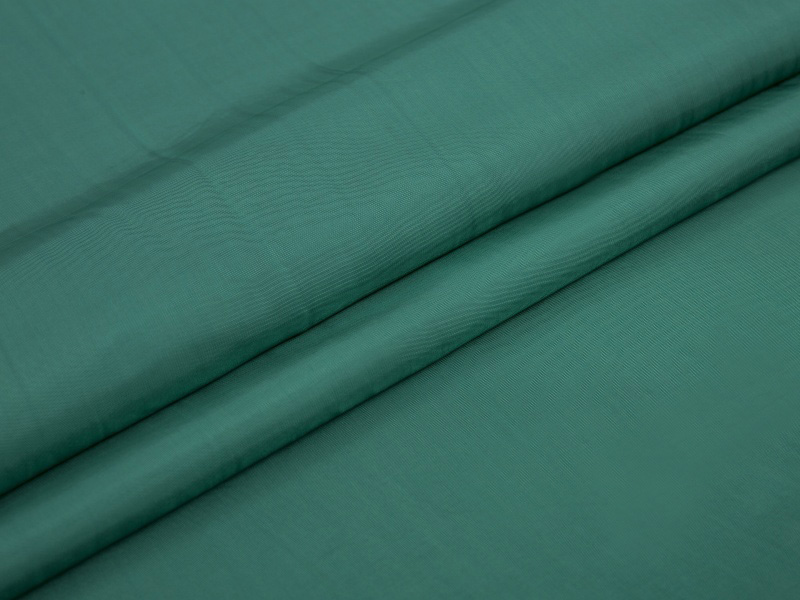
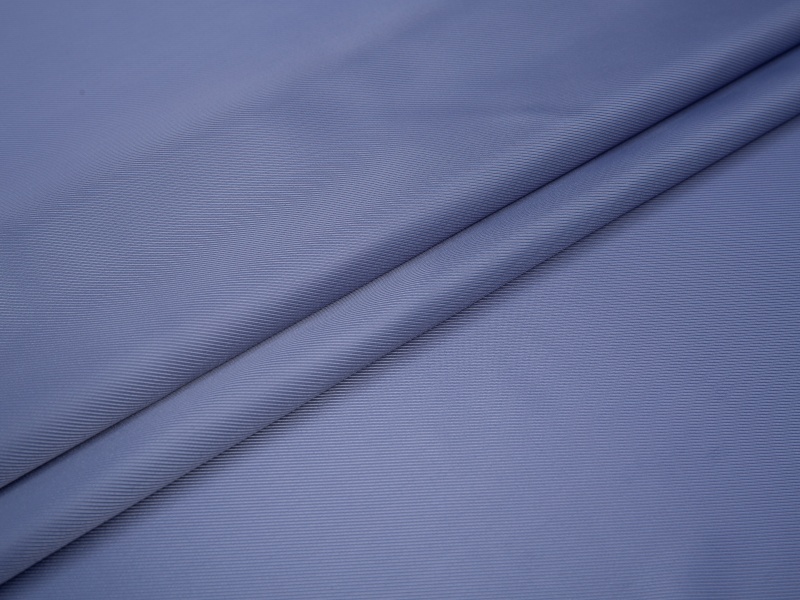
Twill weave is produced by passing the weft yarn over two or more warp yarns before going under, with the interlacement point shifting by one yarn position with each successive weft row. This creates the characteristic diagonal rib or wale visible on the fabric surface. In polyester viscose lining fabrics, twill construction produces a significantly different combination of handle, drape, and surface characteristics compared to plain weave — making it the preferred choice for specific garment applications where plain weave falls short.
Because twill weave has fewer interlacement points per unit area than plain weave, the yarns have more freedom of movement relative to each other. This produces three practical effects that distinguish polyester viscose twill lining from plain lining at the same fiber composition and weight:
The primary trade-off versus plain weave is slightly reduced seam stability and greater susceptibility to yarn snag on rough surfaces, because the longer floats are more exposed. In high-stress areas such as underarm seams and waistband attachments, additional seam reinforcement tape is recommended when specifying twill lining constructions in structured outerwear.
The most common twill repeat in polyester viscose lining production is the 2/1 or 2/2 twill, producing a 45° diagonal rib. Herringbone (broken twill) variants are also produced for brands seeking a classic suiting-reference aesthetic in the lining interior. Fabric weights typically range from 75–120 gsm, with the heavier end of the range used in winter coat and tailored trouser linings where a more substantial feel is appropriate to the garment weight.
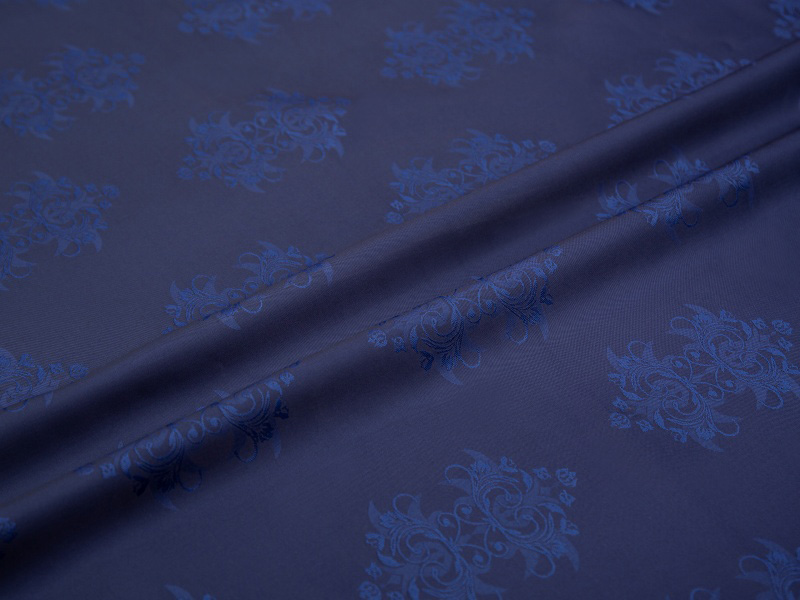
Jacquard lining fabric is produced on a Jacquard loom — a weaving machine that controls each individual warp end independently rather than in groups, enabling the creation of complex, multi-element woven patterns directly in the fabric structure rather than through surface printing. In polyester viscose jacquard lining, the pattern is an integral part of the weave construction itself, producing designs that are identical on repeat, dimensionally stable, and resistant to the fading that eventually affects printed linings.
The Jacquard mechanism allows warp ends to be raised or lowered in any combination for each weft insertion, effectively providing unlimited design freedom within the constraints of the weave structure. This enables polyester viscose jacquard lining to carry designs of arbitrary complexity — company monograms, brand logos, heraldic patterns, geometric repeats, floral motifs, and paisley designs — woven with precision that printing cannot replicate at fine scales. Luxury menswear houses, bespoke tailors, and premium outerwear brands use jacquard linings as a brand differentiation and quality signal visible each time the garment is opened.
The design is typically rendered in two or more weave structures within the same fabric — for example, a satin-weave motif on a twill ground — creating contrast through differential light reflection rather than color difference alone. Multi-color jacquard linings introduce additional yarn colors via multiple weft systems, enabling full pattern color complexity at higher production cost.
Polyester viscose jacquard linings require significantly more complex loom setup than plain or twill constructions. Key procurement parameters include:
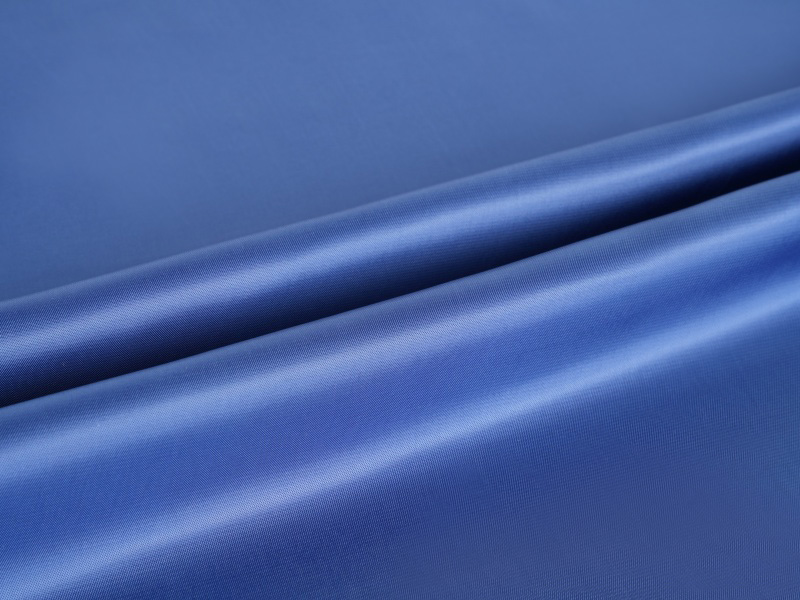
Yarn-dyed fabric is produced by dyeing the yarn before weaving, rather than dyeing the finished fabric (piece dyeing) after weaving. In polyester yarn-dyed sleeve lining, this distinction in production sequence has significant consequences for both the visual character and the performance of the finished fabric — consequences that directly determine its suitability for sleeve lining applications specifically.
In piece-dyed fabric, dye penetrates from the fabric surface inward during the dyeing process. In yarn-dyed fabric, each individual yarn is fully saturated with dye through its entire cross-section before weaving. This produces a color that is consistent throughout the yarn body — not just on the surface — resulting in superior colorfastness to abrasion and rubbing. For sleeve linings, which experience constant friction between the lining surface and the wearer's shirt or blouse sleeve with every arm movement, this through-body color saturation directly translates into a lining that does not show wear-induced color loss at friction points over the garment's service life.
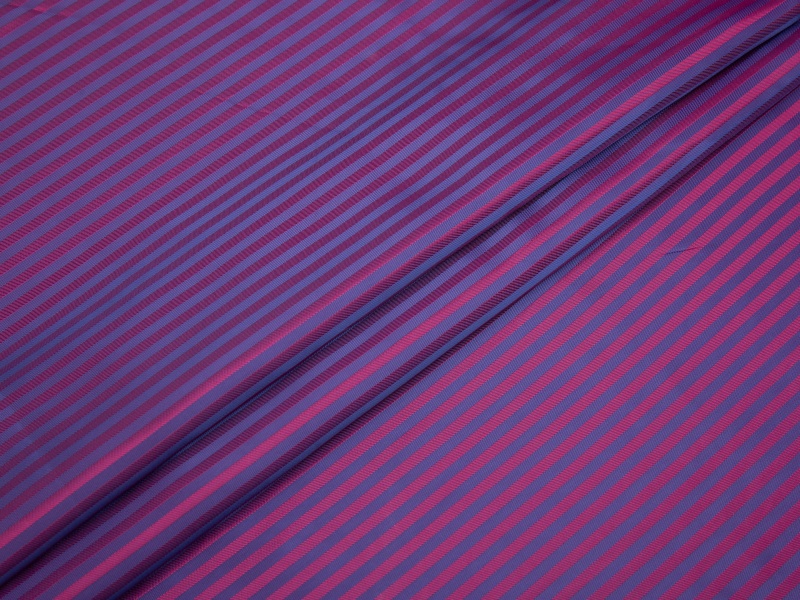
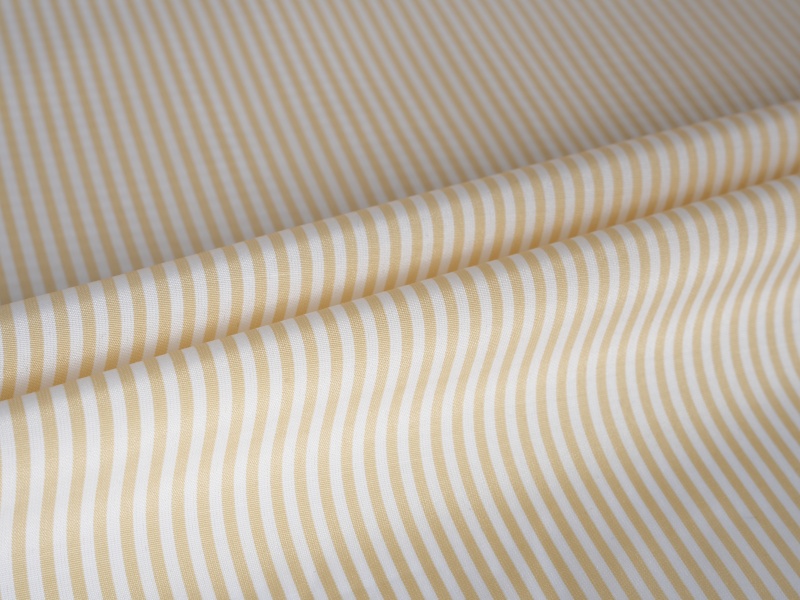
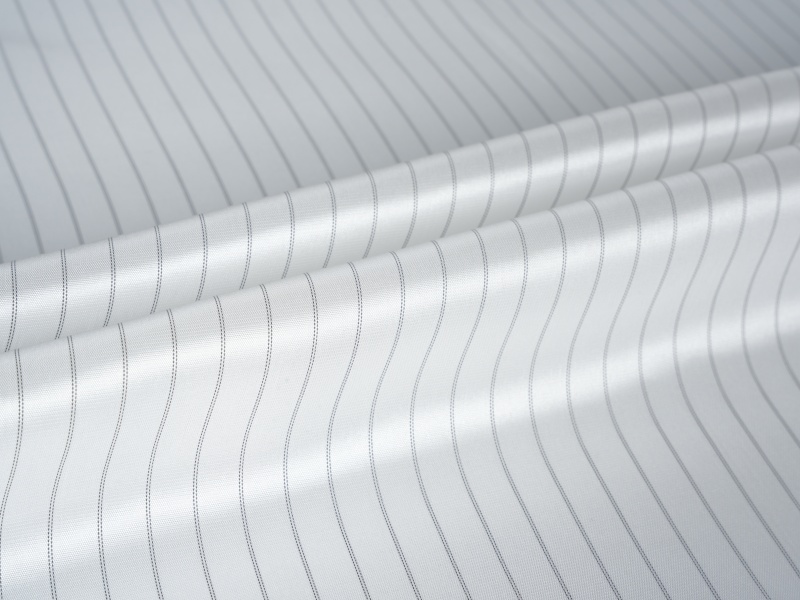
Yarn dyeing also enables the production of woven stripe, check, and two-tone patterns that cannot be achieved by piece dyeing. By weaving pre-dyed yarns of different colors in planned warp and weft sequences, yarn-dyed sleeve linings can carry classic stripe patterns — pencil stripes, Bengal stripes, multi-color candy stripes — that are structurally integral to the fabric rather than printed onto its surface. These woven stripe patterns are a traditional signature of quality tailoring linings, particularly in British and Italian menswear traditions.
Sleeve linings face a distinct set of mechanical demands compared to body linings, and fabric construction must be optimized accordingly:
| Factor | Yarn-Dyed Sleeve Lining | Piece-Dyed Sleeve Lining |
|---|---|---|
| Colorfastness to rubbing | Excellent — through-body saturation | Good — surface-layer dye penetration |
| Pattern capability | Woven stripes, checks, two-tone designs | Solid colors, printed patterns only |
| MOQ flexibility | Higher MOQ per colorway | Lower MOQ — single dye bath covers all |
| Lead time | Longer — yarn dyeing precedes weaving | Shorter — greige fabric dyed at end |
| Cost | Higher per meter | Lower per meter |
| Premium positioning | Standard for tailored and luxury segments | Standard for volume ready-to-wear |
For garment brands specifying sleeve linings, the decision between yarn-dyed and piece-dyed construction ultimately tracks the garment's price tier and the degree to which interior details are considered a component of brand value. At mid-market and above, yarn-dyed stripe sleeve linings communicate craftsmanship and durability — qualities that informed buyers associate with quality construction, and that can meaningfully differentiate a tailored jacket at the point of sale. At volume price points, piece-dyed plain lining delivers adequate performance at the cost efficiency the margin structure requires.
Copyright © Tongxiang Shunli Textile Technology Co., Ltd. All Rights Reserved.Custom Clothing Lining Fabrics Manufacturers
