


 English
 Español
 Français
ADDRESS
- Zicun, Chongfu Town, Tongxiang City, Zhejiang Province, China.
CONTACT
- Tel: +0086-13857379100
- Fax: +0086-0573-89372132
- Email: [email protected]
 2026-09-04
 Industry news
When you open the seam of a well-constructed jacket, two printed surfaces may catch your eye: the outer shell and the interior lining. Both may carry patterns, but they serve radically different purposes, endure different stresses, and are engineered with different priorities. Understanding the distinction between printed lining fabric and printed main fabric is essential for designers, pattern makers, and anyone serious about garment quality.
The most fundamental difference lies in why each fabric exists. A printed main fabric is the public face of the garment; its print is a deliberate design statement meant to be seen. It communicates style, mood, and brand identity directly to the outside world. In contrast, a printed lining fabric is a private detail, a hidden accent that communicates quality and attention to detail to the wearer alone. Its print is rarely visible in normal wear but becomes a signature element when the garment is removed or turned inside out.
Beyond aesthetics, the printed lining fabric serves a protective and functional role. It shields the main fabric from body oils, perspiration, and friction, extending the garment's life. It also conceals seam allowances, interfacings, and construction details, providing a clean, professional interior finish. The main fabric's role, by contrast, is to define the garment's silhouette, drape, and external surface texture.
The fiber choices for each fabric type reflect their different priorities. Main fabrics are selected primarily for their outer appearance, hand feel, and performance against environmental elements. They may be made from wool for warmth and structure, cotton for breathability and printability, or synthetics for durability and wrinkle resistance.
Printed lining fabrics, however, prioritize different properties. They must be smooth to allow the garment to slide on and off easily. They need to be lightweight to avoid adding unnecessary bulk. They should have anti-static properties to prevent cling, and they must be breathable for wearer comfort. These requirements make certain fibers more common in linings:
Main fabrics, conversely, may use heavier, textured, or more rigid fibers like wool, linen, or heavy cotton that would be unsuitable for a comfortable lining.
This is one of the most critical differentiators. A printed lining fabric is subjected to a different kind of wear than a printed main fabric. The lining experiences constant friction against undergarments or the wearer's skin, particularly at high-movement areas like shoulders, underarms, and cuffs. This abrasion can cause surface-level prints to crack, fade, or develop a "chalky" appearance over time.
In contrast, a printed main fabric's print is exposed to sunlight (UV degradation), rain, and general environmental wear, but not the same internal friction. Therefore, the print technology used for each often differs:
A printed main fabric's print longevity is more about UV resistance and wash fastness, while a printed lining's is about abrasion resistance and friction.
How each fabric interacts with the garment's structure is entirely different. The main fabric defines the garment's shape and drape. Its weight, stiffness, and body are primary design considerations.
The printed lining fabric must complement this. It must be slippery enough to reduce friction against layers worn underneath, but not so slippery that it shifts or bags out of shape. It also needs to manage moisture and static, as these directly impact garment comfort and fit.
Furthermore, a lining is usually cut slightly smaller than the main fabric to prevent it from showing at the hem or sleeves. It is attached at key points (neck, waistband, armholes) and hangs freely, allowing the outer fabric to drape naturally. This free-hanging construction means the printed lining fabric cannot support any structural weight; that is the job of the main fabric and any interfacing used. An interfacing adds body and shape to collars, cuffs, and waistbands, a role entirely separate from the lining's function.
The following table summarizes the key distinctions between these two fabric categories, offering a quick reference for material selection and garment design decisions.
| Characteristic | Printed Lining Fabric | Printed Main Fabric |
|---|---|---|
| Primary Role | Interior finish; protects outer fabric; eases garment wear | Garment exterior; primary design statement; defines silhouette |
| Key Fiber Properties | Smooth, lightweight, anti-static, breathable | Drape, texture, color, structural integrity, UV resistance |
| Common Fibers | Polyester, Viscose, Cupro, Silk | Cotton, Wool, Linen, Silk, Polyester blends, Denim |
| Print Stress | Internal friction (abrasion, rubbing against skin/undergarments) | External elements (UV, rain, dirt, washing) |
| Print Method for Durability | Rotary screen (high volume), Sublimation (polyester), Jacquard (woven pattern) | Rotary/Digital screen, Pigment dyeing, Fiber-reactive printing |
| Relationship to Garment Structure | Hangs freely; cut slightly smaller; attached at seams | Defines the primary shape; supported by interfacing |
| Quality Indicator | Print precision, smoothness, anti-static, slip | Fabric hand, color fastness, drape, weave quality |
| Cost Driver | Print complexity, fiber type (e.g., cupro or silk), production volume | Fiber quality, weave complexity, finishing (e.g., mercerizing) |
When developing a garment, the differences between these two fabrics create distinct manufacturing challenges and cost implications:
Yes, but with caution. The main fabric must be lightweight, smooth, and comfortable against the skin. Heavy or coarse fabrics will make the garment bulky and uncomfortable. Additionally, consider cost and wear—using an expensive main fabric as a hidden lining is often not economical.
Polyester is favored for its slipperiness, which makes garments easy to put on and take off. It is also durable, wrinkle-resistant, and holds prints well at a low cost. Cotton linings, while breathable, tend to cling, wrinkle, and are generally more expensive to print with the same vibrancy.
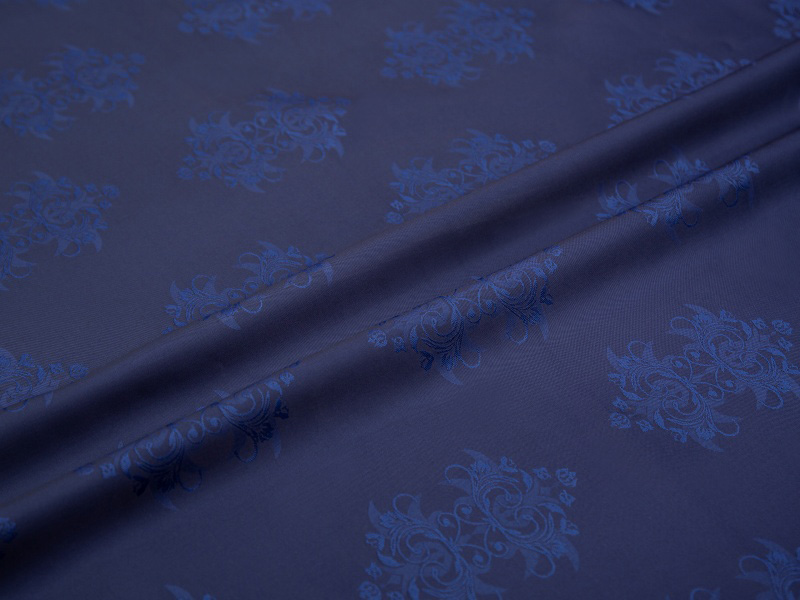
Fading is primarily caused by friction and washing. Choose a printed lining fabric with a high rub-fastness rating (grade 4 or 5 on ISO 105-X12). Washing inside out in cold water and avoiding harsh detergents will also extend the life of the print. For the highest durability, consider a jacquard-woven pattern where the color is in the yarn, not on the surface.
Yes, if the lining is too heavy or stiff, it can restrict the natural drape of the main fabric. This is why a printed lining fabric should always be lighter in weight and have a soft hand. The two fabrics must be compatible; a heavy wool overcoat requires a sturdier lining than a lightweight silk dress.
This is a common point of confusion. An underlining is cut from the same pattern pieces as the main fabric and is basted to the main fabric, and the two are treated as one layer throughout construction. It adds body and opacity. A printed lining fabric, by contrast, is a separate, free-hanging layer attached only at the seams, serving mainly as a finish and to ease wearability.
Copyright © Tongxiang Shunli Textile Technology Co., Ltd. All Rights Reserved.Custom Clothing Lining Fabrics Manufacturers
