


 English
 Español
 Français
ADDRESS
- Zicun, Chongfu Town, Tongxiang City, Zhejiang Province, China.
CONTACT
- Tel: +0086-13857379100
- Fax: +0086-0573-89372132
- Email: [email protected]
 2026-03-13
 Industry news
When selecting a lining fabric for suits or leather garments, polyester lining fabric is the most practical and widely used choice for its durability and affordability, while polyester viscose blends offer a superior hand feel and drape for premium tailoring. Leather suit linings demand breathable, smooth materials that reduce friction and manage moisture effectively. Understanding the differences between these options allows tailors, manufacturers, and consumers to make decisions that directly impact comfort, longevity, and garment performance.
A lining is far more than a finishing touch. It serves as the interface between the garment's shell and the wearer's body, affecting how a suit feels, moves, and ages. In leather jackets and coats, the lining is especially critical because leather itself does not breathe well and can chafe against bare skin.
Key functions of a quality suit lining include:
In leather garments specifically, the lining must also tolerate the stiffness of the outer shell without tearing at stress points. This is why the choice between polyester and polyester viscose blends is not arbitrary—it directly affects wearability.
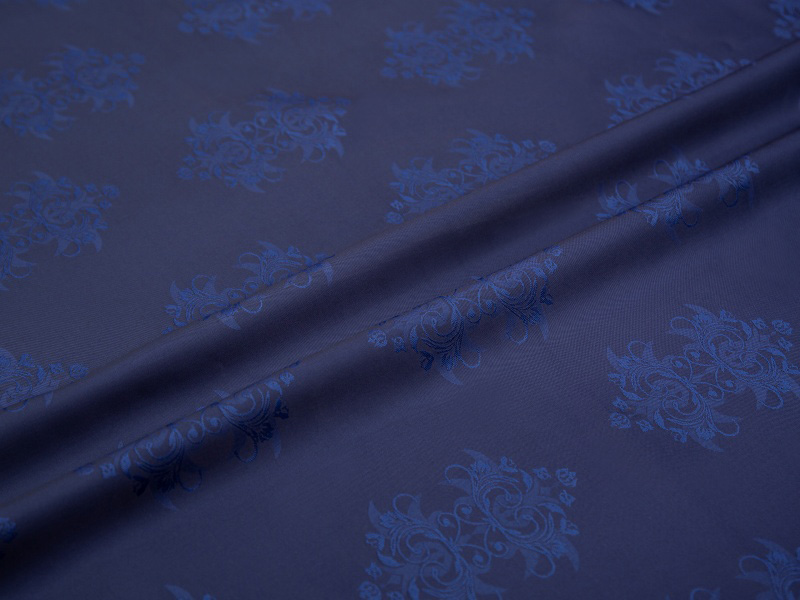
Polyester lining fabric is the dominant choice in the global garment industry. Made from synthetic polymer fibers, it accounts for over 50% of all lining fabric production worldwide, largely because it balances performance and cost at scale.
The primary limitation of 100% polyester lining is poor breathability. Polyester traps body heat and does not wick moisture efficiently, which can lead to discomfort during extended wear—particularly in warmer climates or during physical activity. In leather suits or jackets, where the shell already restricts airflow, this can become a significant issue.
Additionally, polyester can feel slightly "plastic" or stiff against the skin compared to natural or blended alternatives, which impacts the perceived quality of a garment.
Polyester viscose lining fabric combines synthetic polyester with viscose (also known as rayon), a semi-synthetic fiber derived from wood pulp cellulose. The result is a fabric that inherits the strengths of both components, making it a preferred choice for mid-to-high-end suits and quality leather garments.
Viscose alone has a silky texture, good drape, and natural moisture absorption—but it is relatively weak when wet and prone to shrinkage. When blended with polyester, typically in ratios of 65% polyester / 35% viscose or 50/50, the resulting fabric achieves:
For leather suit linings in particular, the softness and drape of a polyester viscose blend significantly improve the wearing experience. The fabric slides smoothly over the leather's inner surface, reducing friction and making the garment easier to put on or remove.
Polyester viscose blends are moderately more expensive than pure polyester—typically 20–40% higher in raw material cost. They also require more careful handling during production, as viscose components can be sensitive to excessive heat. Machine washing is possible in most blends, but high temperatures should be avoided to prevent shrinkage of the viscose fibers.
| Property | 100% Polyester Lining | Polyester Viscose Lining |
|---|---|---|
| Hand Feel | Smooth but slightly synthetic | Soft, silky, natural-feeling |
| Breathability | Low | Moderate |
| Durability | Very High | High |
| Drape | Moderate | Excellent |
| Moisture Absorption | Very Low | Moderate |
| Shrink Resistance | Excellent | Good (with care) |
| Cost | Low | Moderate |
| Best For | Mass-market suits, workwear | Premium suits, leather jackets |
Leather suits and leather jackets present unique challenges for lining selection. Unlike woven suiting fabrics, leather does not flex in the same predictable way, and seams are often glued or stitched with heavier thread—both of which place additional mechanical stress on the attached lining.
A leather jacket without a smooth lining is noticeably harder to put on, especially over other layers. Polyester viscose blends with a satin weave construction are particularly effective here, as the satin surface offers minimal resistance. In contrast, a matte-finish 100% polyester lining may drag slightly—not enough to be a dealbreaker, but enough to affect the perception of quality.
Leather naturally traps heat. A lining with some moisture-wicking capability—such as a polyester viscose blend—helps manage the microclimate inside the garment. Some manufacturers now integrate moisture-management treatments or anti-static finishes into polyester linings specifically for leather outerwear, partially closing the gap with viscose blends.
In leather suits, the shoulder and armhole seams are high-stress zones. Lining failures in these areas are a common quality complaint. Warp-knit polyester linings, which have some inherent stretch, are sometimes used in these zones to absorb movement without tearing—a technique more common in high-end leather jacket manufacturing.
Lining fabrics are not uniform—they vary in weight (measured in grams per square meter, or GSM) and weave structure, both of which affect performance in different garment types.
| GSM Range | Fabric Type | Typical Application |
|---|---|---|
| 60–80 GSM | Lightweight polyester | Summer suits, tropical weight jackets |
| 80–110 GSM | Standard polyester or poly-viscose | Year-round business suits, formal wear |
| 110–140 GSM | Heavy poly-viscose or satin weave | Leather jackets, winter suits, outerwear |
| 140+ GSM | Quilted or padded polyester lining | Heavy leather coats, insulated outerwear |
For most leather suits, a weight range of 100–130 GSM in a polyester viscose satin or twill weave represents the optimal balance between body, durability, and comfort.
Selecting the correct lining comes down to matching fabric properties to the specific demands of the garment and its intended use environment. Here is a practical decision framework:
Proper care extends the life of both the lining and the outer garment. Lining failure is often the first sign of a garment aging prematurely, so protecting it is worthwhile.

Copyright © Tongxiang Shunli Textile Technology Co., Ltd. All Rights Reserved.Custom Clothing Lining Fabrics Manufacturers
