


 English
 Español
 Français
ADDRESS
- Zicun, Chongfu Town, Tongxiang City, Zhejiang Province, China.
CONTACT
- Tel: +0086-13857379100
- Fax: +0086-0573-89372132
- Email: [email protected]
 2026-07-06
 Industry news
Suit lining is most commonly made from Bemberg (cupro), viscose rayon, silk, or polyester, with the choice depending heavily on the price point and quality tier of the finished garment. Bemberg, a semi-synthetic fiber made from regenerated cotton linter, has become something of an industry standard for mid-to-premium suits because it offers a smooth, breathable, silk-like feel at a considerably lower cost than actual silk, while also managing moisture better than most fully synthetic alternatives.
Higher-end tailoring and bespoke suits sometimes use genuine silk lining, prized for its exceptional smoothness against clothing worn underneath and its natural temperature-regulating properties, though silk is more delicate, more expensive, and requires more careful cleaning than synthetic alternatives. At the budget end of the market, polyester lining dominates mass-produced suits, since it's inexpensive, durable, and resistant to wrinkling, even though it doesn't breathe as well as natural or semi-synthetic fibers and can feel noticeably less premium against the skin.
Viscose rayon lining sits between these extremes, offering a soft, silk-adjacent hand feel at a mid-range price point, though it's generally less durable than Bemberg and more prone to water spotting during cleaning. The right lining choice for a suit ultimately comes down to balancing comfort, breathability, durability, and cost against how the garment will actually be worn and cared for over its lifetime.
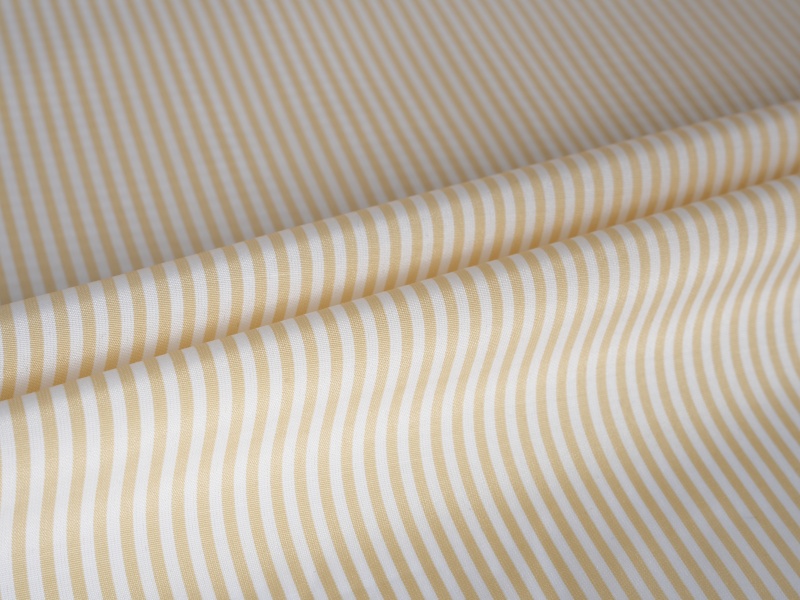
Polyester is the dominant lining choice for leather jackets primarily because of its durability and slip, both of which matter enormously for a garment that's frequently put on and taken off, and that experiences constant friction against the inside of the leather shell. Polyester's smooth, low-friction surface allows the jacket to slide easily over shirts and sweaters without bunching or dragging, a practical benefit that natural fibers generally can't match at the same price point.
Cost and manufacturing consistency are equally important factors, since polyester lining fabric is inexpensive to produce at scale, resists wrinkling without special care, and holds up to the repeated stretching and abrasion that leather jackets experience far better than more delicate natural fiber linings would over the same period of daily wear. This combination of durability and low cost is why polyester remains the standard choice across the vast majority of leather jackets, from budget to mid-range price tiers.
Polyester lining also plays a functional role in temperature regulation and moisture handling, since many polyester linings used in outerwear are engineered with a slight brushed or quilted structure that traps a thin layer of insulating air, adding warmth without significant bulk. This makes polyester not just a cost-driven choice but a genuinely practical one for a garment meant to provide both structure and warmth across a wide range of weather conditions.
Choosing between silk and polyester for a leather jacket lining largely comes down to how the jacket will be worn and what the wearer prioritizes: silk offers a noticeably more luxurious feel against the skin and superior breathability, making it a strong choice for a jacket intended as a special-occasion or lower-activity piece, worn over lighter clothing where its smooth, temperature-regulating properties can actually be appreciated day to day.
Polyester, by contrast, is the more practical choice for a jacket that will see frequent, everyday wear, since it resists abrasion and stretching far better than silk over repeated use, doesn't require the delicate cleaning silk demands, and holds up better to the friction of being put on and taken off dozens of times a month. For a daily-driver leather jacket expected to last for years under regular use, polyester lining is generally the more durable and lower-maintenance option.
Cost is also a meaningful factor in this decision, since silk lining adds significant expense to a custom or relined leather jacket compared to polyester, and that added cost doesn't necessarily translate into a proportionally better everyday experience unless the wearer specifically values silk's feel and breathability enough to justify the price difference and the extra care it requires.
Dress lining commonly uses habotai silk, acetate, polyester, or viscose, chosen based on the outer dress fabric, the formality of the garment, and how the dress needs to drape and move. Habotai silk, a lightweight plain-weave silk, is a popular choice for higher-end dresses because of its exceptionally soft hand feel and natural drape, which complements delicate outer fabrics like chiffon or fine wool without adding bulk or stiffness.
Acetate lining is widely used in both bridal and eveningwear because it offers a similarly smooth, silk-like appearance and drape at a significantly lower cost than real silk, though it's less breathable and somewhat more prone to snagging than natural fibers. Polyester lining remains common in mass-market and everyday dresses for the same reasons it dominates other garment categories: low cost, wrinkle resistance, and consistent performance across repeated wear and washing.
Viscose lining offers a comfortable middle ground for dress construction, providing decent breathability and a soft feel at a more moderate price point than silk, though it generally requires more careful laundering than polyester. The right lining fabric for any given dress should complement the weight, structure, and drape of the outer fabric, since a lining that's too stiff or too heavy can distort how the finished garment hangs and moves on the body.
| Lining Material | Feel & Breathability | Durability | Relative Cost |
|---|---|---|---|
| Silk | Excellent | Moderate | $$$$ |
| Bemberg (Cupro) | Very good | Good | $$$ |
| Viscose | Good | Moderate | $$ |
| Polyester | Fair | Excellent | $ |
General comparison of common suit, jacket, and dress lining materials by feel, durability, and cost.

Copyright © Tongxiang Shunli Textile Technology Co., Ltd. All Rights Reserved.Custom Clothing Lining Fabrics Manufacturers
