


 English
 Español
 Français
ADDRESS
- Zicun, Chongfu Town, Tongxiang City, Zhejiang Province, China.
CONTACT
- Tel: +0086-13857379100
- Fax: +0086-0573-89372132
- Email: [email protected]
 2026-07-01
 Industry news
A suit's outer fabric gets all the attention, but the lining is what actually touches skin for an entire day of wear, and it does three practical jobs: it lets the jacket slide on and off smoothly, it manages moisture and heat against the body, and it hides and protects the internal construction — seams, canvassing, shoulder padding — that gives the jacket its shape. Pairing a breathable wool shell with a non-breathable lining largely defeats the purpose of the wool, since the lining sits directly against skin and controls how much moisture and heat can actually escape.
Cupro, most commonly sold under the brand name Bemberg, is a semi-synthetic fiber made from cotton linter and is the material the majority of quality suit linings are built from. Its fibers are uniformly round rather than the flatter, more irregular shapes found in cotton, silk, or polyester, which gives cupro an unusually low friction coefficient — this is what makes a Bemberg-lined jacket glide on so easily rather than catching against a shirt. That same crystalline fiber structure also allows air and moisture to move through the fabric even at a tight weave, so cupro manages to combine breathability with a smooth, silky handle in a way few other lining fabrics achieve. The tradeoff is cost: cupro sits toward the premium end of the lining price range.
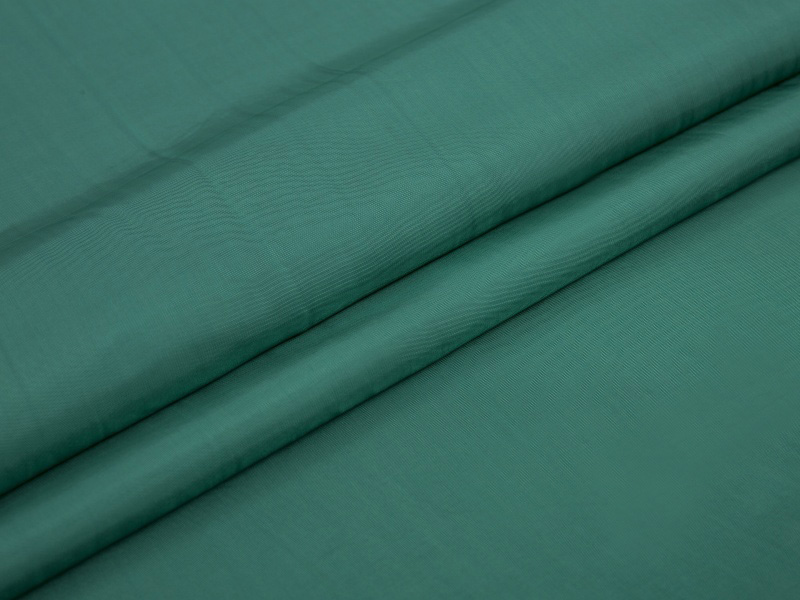
Viscose (also called rayon, or sold under the brand name Ermazine) is a semi-synthetic fiber made from wood pulp rather than cotton, and it's the most common alternative to cupro in mid-range suits. It shares much of cupro's silky drape and smooth feel at a noticeably lower price point, with good breathability and absorbency, though it isn't quite as durable and can be more prone to shrinking or creasing over time. For manufacturers and tailors balancing cost against comfort, viscose is often the practical sweet spot between cupro's premium performance and polyester's budget durability.
| Lining Type | Breathability | Durability | Typical Price Tier |
|---|---|---|---|
| Cupro (Bemberg) | Excellent | High | Premium |
| Viscose/Rayon | Good | Moderate | Mid-range |
| Silk | Good | Low | Premium (specialty use) |
| Acetate | Fair | Moderate | Budget to mid-range |
| Polyester | Low | High | Budget |
Comparison of common suit lining fabrics by breathability, durability, and typical price tier.
Polyester is the standard lining for off-the-rack, budget-friendly suits: it's affordable, wrinkle-resistant, and holds up well to repeated wear and machine cleaning, but its low moisture and heat transfer means it traps warmth against the body far more than the natural or semi-synthetic alternatives. Silk offers real luxury and drape but is comparatively fragile as a lining fabric — it wears through faster than cupro despite the higher price tag, which limits how often serious tailors recommend it for a jacket's full interior. Acetate is often used as a cost-effective silk look-alike, offering a similar sheen at a fraction of the price, though it doesn't breathe as well as true silk or cupro.



Copyright © Tongxiang Shunli Textile Technology Co., Ltd. All Rights Reserved.Custom Clothing Lining Fabrics Manufacturers
