


 English
 Español
 Français
ADDRESS
- Zicun, Chongfu Town, Tongxiang City, Zhejiang Province, China.
CONTACT
- Tel: +0086-13857379100
- Fax: +0086-0573-89372132
- Email: [email protected]
 2026-06-03
 Industry news
Lining fabric is an inner layer of material sewn inside a garment — typically a jacket, coat, dress, or skirt — to cover the structural elements, protect the outer shell from wear, and improve how the garment feels against the skin. It sits between the fashion fabric and the body, hidden from view but fundamental to the garment's performance and finish.
The primary functions of lining material are threefold: it conceals seams, interfacing, and padding that would otherwise be visible from the inside; it reduces friction between the garment and the wearer's clothing or skin, making it easier to put on and take off; and it adds a degree of structure and body to the outer fabric, helping garments retain their shape over time.
A well-chosen lining can extend the life of a garment significantly. Studies in apparel manufacturing consistently show that lined outerwear experiences up to 40% less internal abrasion than unlined counterparts, directly reducing fabric fatigue at seams and stress points.
The choice of lining material depends on the outer fabric, the garment's end use, and the desired hand feel. Each material has a specific performance profile.
Bemberg — also called cupro — is widely regarded as the premium standard for suit and jacket lining. Derived from cotton linter fibers through a regenerated cellulose process, it produces a fabric with a silky drape, excellent breathability, and anti-static properties. It is the most common choice in types of suit lining for tailored garments in the mid-to-high price range. Bemberg is hypoallergenic and moisture-wicking, making it particularly suitable for warm-weather wear.
Polyester is the most widely used lining fabric in volume production. It is durable, wrinkle-resistant, colorfast, and available at a low cost per meter. However, it lacks breathability and tends to generate static, which makes it less comfortable for all-day wear. Budget-priced suits and fast-fashion dresses account for the majority of polyester lining usage globally. It performs well in outerwear categories where the garment is not worn directly against the skin for extended periods.
Silk is the traditional luxury lining choice, particularly for lining a silk dress or couture outerwear. It is naturally temperature-regulating, lightweight, and drapes beautifully. The challenge with silk lining is durability: it is susceptible to perspiration damage and requires careful laundering. In practice, Bemberg has largely replaced silk in commercial tailoring because it offers a comparable hand feel at a fraction of the price and with better longevity.
Viscose linings offer good drape and a soft feel at a lower price point than silk. They are commonly used in fabric for lining dresses and skirts, particularly where the design requires the lining to move fluidly with the outer layer. Viscose is semi-synthetic, derived from wood pulp, and is more breathable than polyester. Its main drawback is poor moisture resistance — it weakens when wet and is prone to shrinkage if not pre-washed.
Acetate has a silky sheen and is moderately priced, making it a common option for mid-range dress linings. It holds dye well and resists static. However, it is sensitive to heat (it melts under a hot iron), perspiration, and acetone-based products, which limits its long-term practicality. Its use has declined as Bemberg and improved polyester blends have become more accessible.
Cotton is occasionally used as a lining fabric for casual or unstructured garments, particularly where breathability is the top priority. It is not common in tailored outerwear because it adds weight, wrinkles easily, and does not provide the smooth slide against the outer fabric that a suit or structured dress requires. Cotton lawn or batiste is sometimes used for lightweight summer dress linings.
Thermal linings — including polar fleece, wool flannel, and quilted polyester batting — are used in outerwear to add warmth. Quilted linings are typically found in winter coats and field jackets. These are functional rather than aesthetic linings and are generally a different category from the smooth linings used in tailored clothing.
| Lining Material | Breathability | Durability | Best Used In | Price Range |
|---|---|---|---|---|
| Bemberg (Cupro) | Excellent | High | Suits, tailored jackets | Medium–High |
| Polyester | Poor | High | Budget garments, outerwear | Low |
| Silk | Excellent | Medium | Couture, silk dresses | High |
| Viscose (Rayon) | Good | Medium | Dresses, skirts | Low–Medium |
| Acetate | Moderate | Low–Medium | Mid-range dresses | Low–Medium |
In tailored menswear, the extent and construction of the lining are as important as the material itself. The three main configurations are full lining, half lining, and quarter lining — each suited to different climates, fabrics, and price points.
A fully lined suit jacket covers the entire interior — front panels, back, and sleeves. This is the most common construction in structured suits and formal tailoring. The inner cloth of a suit in this configuration provides maximum protection to the outer fabric's structure, makes the jacket easier to put on over shirts, and allows for a cleaner interior finish. The trade-off is reduced breathability, which is why full lining is more appropriate for cooler climates and heavier wools.
A half-lined jacket covers the front panels and sleeve lining but leaves the back panel either unlined or finished with a facing strip only. This construction dramatically improves breathability, making it the preferred choice for summer suits in lightweight fabrics such as linen, fresco, or tropical wool. Neapolitan tailoring traditions favor half lining for its lightness and comfort. The exposed back seams are finished with flat-felled seams or bound seam allowances.
Quarter lining — sometimes called a patch lining — uses lining material only at the front panels near the chest and armhole areas, where friction and wear are highest. The rest of the jacket is unlined. This construction is most common in very casual or unconstructed jackets and in warm-weather tailoring designed for maximum air circulation.
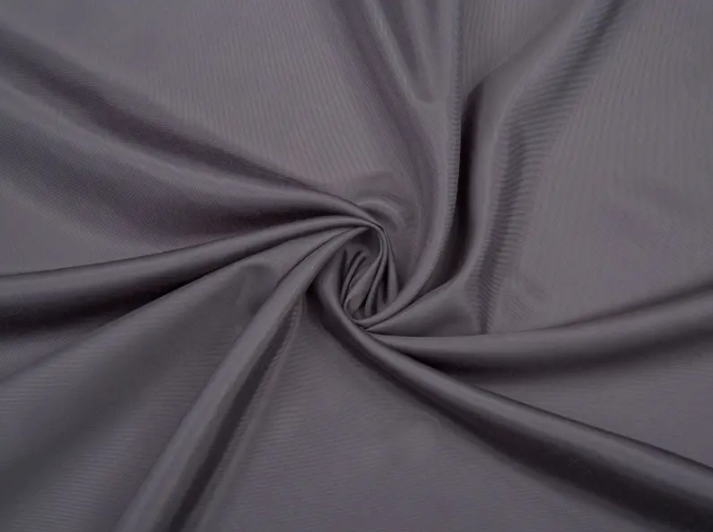
The half canvas suit vs full canvas distinction is often conflated with lining type, but they refer to two different structural layers. Canvas is an internal interlining — a layer of woven horsehair or wool/cotton fabric stitched loosely between the outer shell and the lining — that gives a tailored jacket its chest shape. The lining is the visible inner surface; the canvas is structural and hidden.
In a full canvas suit, a continuous canvas piece runs from the shoulder down through the chest and lapels. Because it is hand-stitched with a floating stitch (not glued), it moves with the wearer's body over time, gradually molding to their shape. This is considered the hallmark of bespoke and high-end tailoring. Full canvas suits typically use Bemberg or silk lining, and the canvas itself is never visible — it sits inside the chest, beneath the lining.
A half canvas jacket has floating canvas only in the chest and lapel area; the lower half of the front panel uses a fused (glued) interlining. This is the standard construction in the $400–$1,500 suit range, offering better shape retention and breathability than fully fused jackets at a lower manufacturing cost than full canvas. The lining choice in half canvas suits is typically Bemberg or polyester depending on the brand's price positioning.
The lowest cost option, fully fused suits use a heat-bonded interlining glued directly to the outer fabric with no floating canvas layer. They are lighter to produce and consistent in shape initially, but the glue bond degrades with dry cleaning over time, leading to the characteristic "bubbling" effect where the interlining separates from the shell. Fully fused suits almost universally use polyester linings.
Understanding how to line a garment requires matching the lining's weight, drape, and stretch to the outer fabric. A lining that is too heavy will distort the outer shell; one that is too stiff will prevent the garment from moving naturally.
The right fabric for lining clothes differs sharply between dresses and structured outerwear. For dresses — particularly bias-cut, slip-style, or silk gowns — the lining serves primarily as a modesty and comfort layer. It should be light, soft, and drapy, with minimal structure. Viscose, Bemberg, and silk habotai are the standard choices here. When lining a silk dress, the safest approach is to use a Bemberg lining at the same weight as the silk, which provides opacity without adding bulk or changing the drape of the outer fabric.
For structured outerwear — wool coats, blazers, and formal jackets — the lining needs to withstand the mechanical stress of daily dressing and removal. Bemberg is the benchmark material for this category, with polyester twill as the budget alternative. The lining in outerwear also plays a role in thermal performance: a thicker lining in a winter coat reduces wind transmission through the seams, while a very light Bemberg lining in a summer blazer allows air circulation from the half-lined back.
One practical rule of thumb: the lining fabric should always be smoother than the outer fabric. This ensures that the garment slides over underlying clothing rather than catching — which is the whole functional point of an inner lining layer.
Copyright © Tongxiang Shunli Textile Technology Co., Ltd. All Rights Reserved.Custom Clothing Lining Fabrics Manufacturers
