


 English
 Español
 Français
ADDRESS
- Zicun, Chongfu Town, Tongxiang City, Zhejiang Province, China.
CONTACT
- Tel: +0086-13857379100
- Fax: +0086-0573-89372132
- Email: [email protected]
 2026-06-15
 Industry news
Suit lining is the interior fabric layer that determines how a garment feels against the body, how smoothly it slides over shirts and knitwear, and how well the outer shell retains its shape over time. A well-chosen lining reduces friction between the suit fabric and the wearer's clothing, protects the shell fabric's inner face from perspiration and body oils, conceals internal construction (padding, interfacing, seam allowances), and contributes to the overall drape and structure of the finished garment.
Lining selection involves balancing breathability, durability, hand feel, ease of care, and cost. Polyester linings dominate the commercial and tailored suiting market because they combine dimensional stability, low moisture absorption, colorfastness, and affordability across all four major construction types: plain, twill, jacquard, and stretch.
Suit linings are categorized by weave structure, fiber content, and functional finish. The main distinctions in the polyester lining family are:
Beyond polyester, premium suit linings include viscose (Bemberg/cupro), which closely mimics the cool hand of silk at lower cost; silk, favored in bespoke tailoring for its natural moisture management; and acetate, once common but now largely replaced by polyester and cupro due to its susceptibility to perspiration damage. The following sections focus on the four polyester lining types most widely specified in commercial and tailored suiting production.
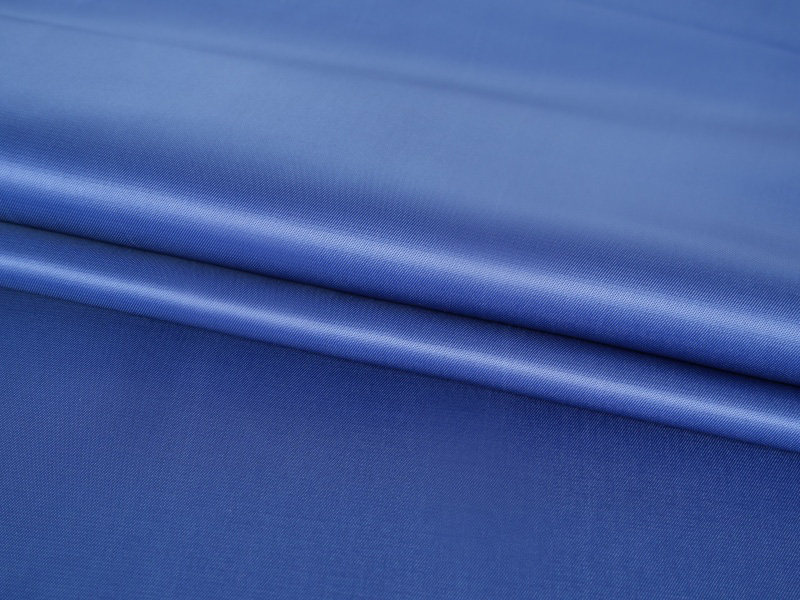
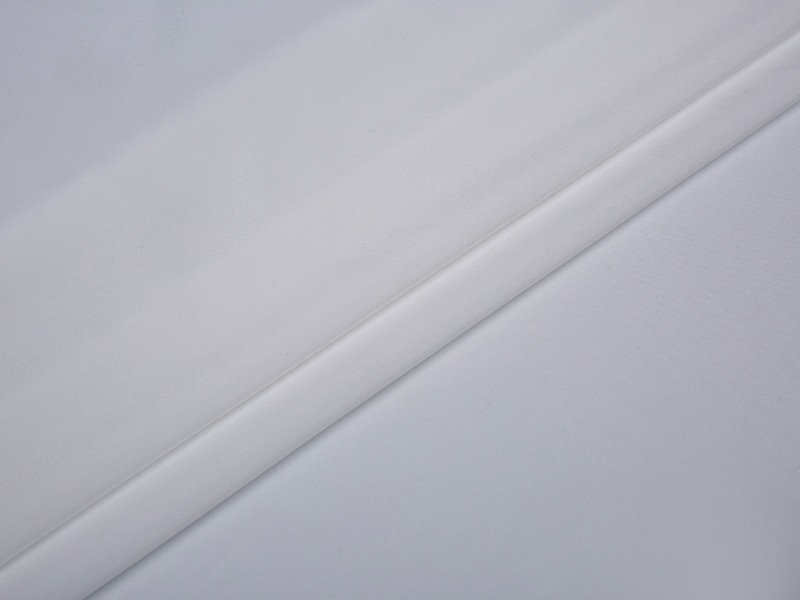
Polyester plain lining fabric—also called polyester taffeta lining—is woven in a simple over-under interlacing pattern where each warp yarn crosses each weft yarn alternately. This produces the tightest possible interlacement of any weave structure, resulting in a smooth, flat surface with a characteristic light sheen and minimal stretch in either direction.
Plain weave polyester taffeta is the highest-volume suit lining globally, used extensively in ready-to-wear suits, blazers, and formal trousers across all price tiers. Its key practical advantages are consistent smoothness for easy dressing, reliable colorfastness across deep and pastel dye ranges, and predictable seam behavior during garment construction. The firm, flat structure also makes it the easiest lining type to cut and sew accurately in production environments.
Performance characteristics to specify when sourcing polyester plain lining:
The principal limitation of plain polyester lining is breathability. The tight interlacement restricts air circulation compared to open-weave alternatives, making it less comfortable in warm conditions unless a moisture-wicking finish is applied.
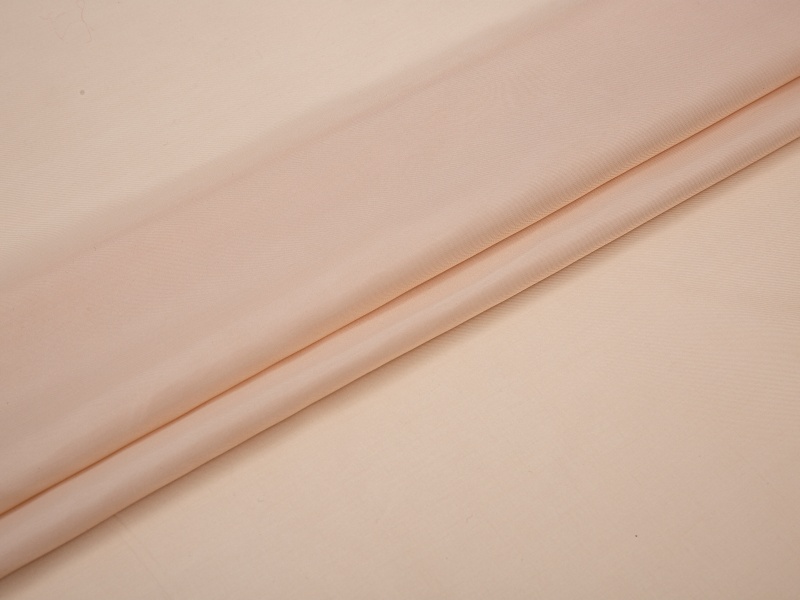
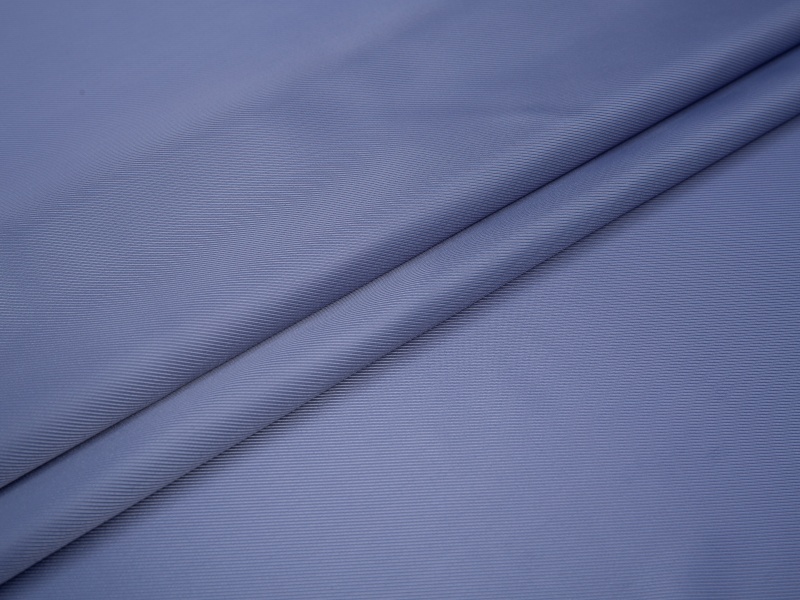
Polyester twill lining fabric uses a diagonal interlacing pattern in which each warp yarn floats over two or more weft yarns before passing under one, offset by one position in each successive row. This creates the characteristic diagonal rib (wale) visible on the fabric surface and produces a fundamentally different set of properties compared to plain weave.
The longer yarn floats in twill construction reduce the number of interlacement points per unit area, allowing the yarns to pack more densely while maintaining a softer, more supple hand. Polyester twill lining typically drapes more fluidly than taffeta at the same weight, which is why it is preferred for structured suits where the lining must move smoothly without adding stiffness to the garment's silhouette.
Common twill variants used in suit lining:
A practical consideration: twill linings are slightly more prone to snagging than plain weave because the longer surface floats can catch on sharp edges or jewelry. In high-abrasion contact zones (underarm panels, back lining), some manufacturers substitute plain weave panels while using twill for the body lining.
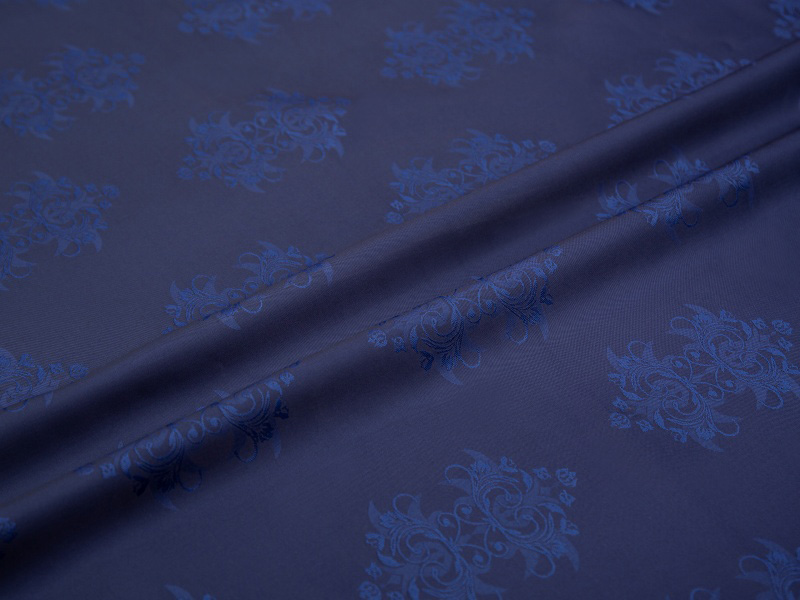
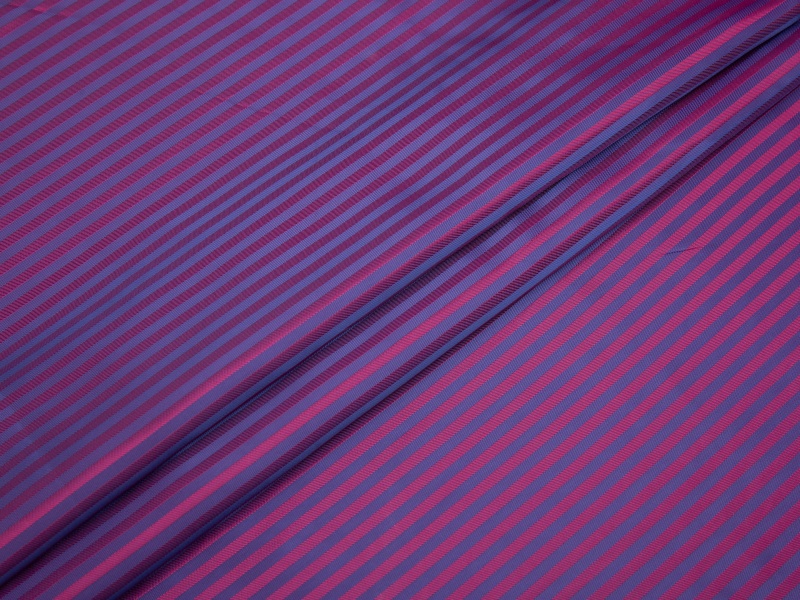
Polyester jacquard lining fabric is woven on a Jacquard loom that individually controls each warp thread, allowing complex patterns—paisleys, florals, geometric repeats, damask motifs, and custom woven logos—to be produced directly in the weave structure rather than printed onto the surface. The pattern is structural and permanent, with no risk of crocking or print fading under dry cleaning or perspiration exposure.
Jacquard lining is the premium choice for brand differentiation in tailored suiting, particularly in the luxury ready-to-wear and bespoke markets where the lining is a signature brand element visible when the jacket is open. Custom woven jacquard linings with house monograms, emblems, or proprietary patterns are standard in premium menswear brands and corporate uniform tailoring programs.
Structural and practical notes on polyester jacquard lining:
Polyester stretch lining fabric incorporates elastane (spandex/Lycra) yarns—typically at 3–8% by weight—woven or knitted with polyester filament to produce a lining that recovers from elongation rather than remaining distorted after movement. The practical result for the wearer is a garment that moves with the body rather than resisting it: sleeves raise without pulling, and seat panels flex during sitting without creating stress lines at the shell fabric.
Stretch lining has become the standard specification for slim-fit and athletic-cut suits, where the reduced ease built into the shell requires the lining to actively contribute to mobility rather than simply reducing friction. In traditional structured suits with full ease allowances, non-stretch linings function adequately. In contemporary cuts where the jacket is close to the shoulder and chest, non-stretch lining becomes the mobility-limiting layer.
Stretch lining is produced in two primary constructions:
Care considerations for stretch linings: elastane degrades at high temperatures and in contact with chlorine bleach. Suits with polyester-elastane blend linings should be dry-cleaned cold or machine-washed at 30°C maximum without bleach. Extended tumble drying above 60°C permanently degrades elastane fiber, reducing recovery and causing the lining to bag.
| Property | Plain (Taffeta) | Twill | Jacquard | Stretch |
|---|---|---|---|---|
| Drape | Firm | Fluid | Moderate | Fluid + elastic |
| Surface sheen | Medium | Medium–high | High (pattern-dependent) | Low–medium |
| Mobility | Standard | Standard | Standard | Enhanced |
| Snag resistance | Excellent | Good | Good | Moderate (knit) / Good (woven) |
| Design potential | Print only | Print or stripe | Woven pattern / logo | Print or plain |
| Relative cost | Lowest | Low–medium | Highest | Medium |
| Best for | Volume RTW, all suit types | Structured tailored suits | Luxury RTW, bespoke, branded | Slim-fit, athletic-cut suits |
Each has distinct advantages. Polyester lining is more durable, colorfast, and resistant to perspiration damage, and it retains its shape over more dry-cleaning cycles. Cupro (Bemberg) lining has a significantly cooler, silkier hand that feels more comfortable against the skin in warm conditions, and its natural moisture-wicking properties reduce clamminess compared to standard polyester. Premium and bespoke suits often use cupro as a body lining for comfort while specifying polyester in high-wear areas such as sleeve and pocket panel linings where durability matters more. For volume ready-to-wear production, polyester is the practical choice; for customer-facing premium positioning, cupro justifies the added cost.
A standard two-piece suit (jacket and trousers) requires approximately 2.8–3.5 meters of lining fabric at 140–150 cm width, depending on the pattern repeat, size, and whether the jacket is fully or half-lined. A fully lined jacket alone uses approximately 1.8–2.2 meters. Jacquard linings with large pattern repeats require additional fabric for pattern matching at seams, potentially adding 0.3–0.5 meters to the total consumption.
Sleeve lining failure is almost always caused by abrasion and tension cycling at the elbow point and along the forearm where the lining contacts the outer fabric with every arm movement. Lightweight linings (below 55 g/m²) in this zone wear through faster than body linings because the surface contact area is small and load per unit area is high. Specifying a heavier sleeve lining (70–90 g/m²) or reinforcing the elbow panel with a double-layer lining is a standard tailoring technique for extending garment service life. Stretch lining at the sleeve also reduces mechanical stress by accommodating arm movement elastically rather than resisting it.
Yes. Polyester plain and twill lining fabrics are widely used beyond suits in coat lining, dress lining, waistband interlining, bag and luggage interior panels, and decorative pillow backing. Jacquard lining fabrics appear frequently in premium gift packaging, jewelry box interiors, and decorative fashion accessories. Stretch lining is used in activewear underlayers, swimsuit linings, and figure-shaping garments where the smooth surface reduces friction while the elastane content provides containment.
A fully lined jacket has lining fabric covering the entire interior of the front, back, and sleeves. A half-lined jacket omits the back lining below approximately the shoulder blade level, leaving the inner face of the shell fabric exposed (usually finished with a Hong Kong seam or serged edge). Half-lining improves breathability and is common in summer-weight and unstructured suits. It also reduces cost and total fabric consumption by approximately 0.5–0.8 meters. Fully lined jackets provide better shape retention, a cleaner interior appearance, and greater warmth—standard in structured business and formal suiting.
Copyright © Tongxiang Shunli Textile Technology Co., Ltd. All Rights Reserved.Custom Clothing Lining Fabrics Manufacturers
