


 English
 Español
 Français
ADDRESS
- Zicun, Chongfu Town, Tongxiang City, Zhejiang Province, China.
CONTACT
- Tel: +0086-13857379100
- Fax: +0086-0573-89372132
- Email: [email protected]
 2026-11-09
 Industry news
Choosing the right sleeve lining fabric is about more than matching the outer shell. In tailored suits, leather jackets, and fashion outerwear, the sleeve lining is the layer that guides every arm movement, survives repeated friction, and leaves an immediate impression when the jacket is removed. For manufacturers and designers, the decision usually comes down to two different dyeing routes: yarn-dyed sleeve lining fabric and piece-dyed lining. This article compares the two on color fastness, stripe clarity, and luxury aesthetics, so you can choose the lining that truly supports a high-end garment.
Yarn-dyed and piece-dyed lining differ in the order of production. In piece dyeing, a greige fabric is woven first and then immersed in a dye bath. It is an efficient method for solid-color linings. In yarn dyeing, the yarn is colored before weaving. Dyed yarns are arranged in the warp and weft directions to create stripes, checks, and plaids as the fabric is constructed.
Because the dye is applied to the fiber before weaving, the color becomes part of the yarn structure. This small difference in timing creates significant differences in color fastness, pattern definition, and hand feel.
In sleeve linings, color fastness is a practical issue. Every time the wearer puts on or removes the jacket, the sleeve lining rubs against a shirt, skin, and outer fabrics. If the dye sits only on the surface of the fabric, friction can cause fading or color transfer. Piece-dyed lining is especially vulnerable to this problem because the fabric is colored as a whole after weaving, and the dye may not penetrate every yarn evenly.
Yarn-dyed sleeve lining fabric performs better in this area. Since every yarn is saturated with dye before weaving, the color is locked into the fiber structure. The dye has more time to penetrate, especially in spun polyester and polyester-viscose blends, which are often dyed under controlled heat and pressure. The result is stronger resistance to abrasion, repeated washing, and exposure to light.
| Feature | Yarn-Dyed Sleeve Lining | Piece-Dyed Lining |
|---|---|---|
| Color Penetration | High | Surface-focused |
| Fading After Friction | Low | Moderate to high |
| Wash and Dry-Clean Fastness | Excellent | Variable |
| Batch Consistency | Strong | Can drift between lots |
| Ideal Use | Stripes, checks, premium solids | Basic solid colors |
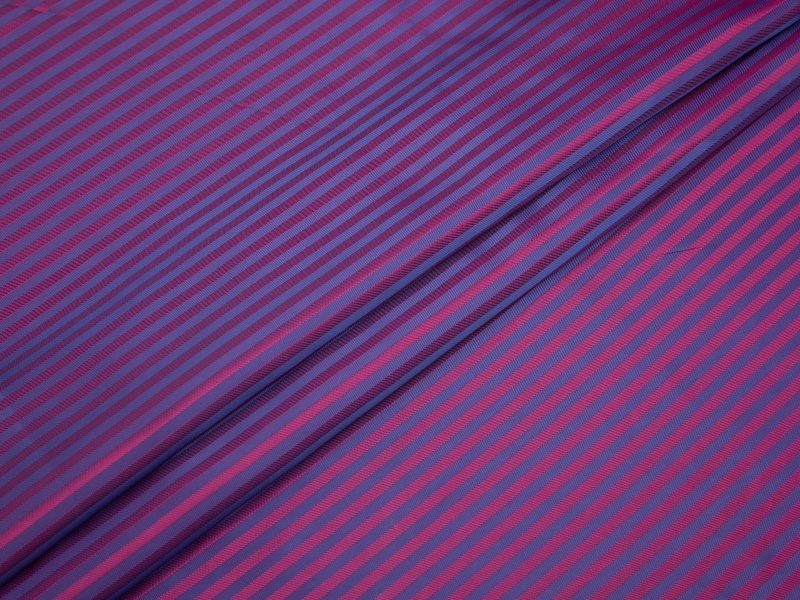
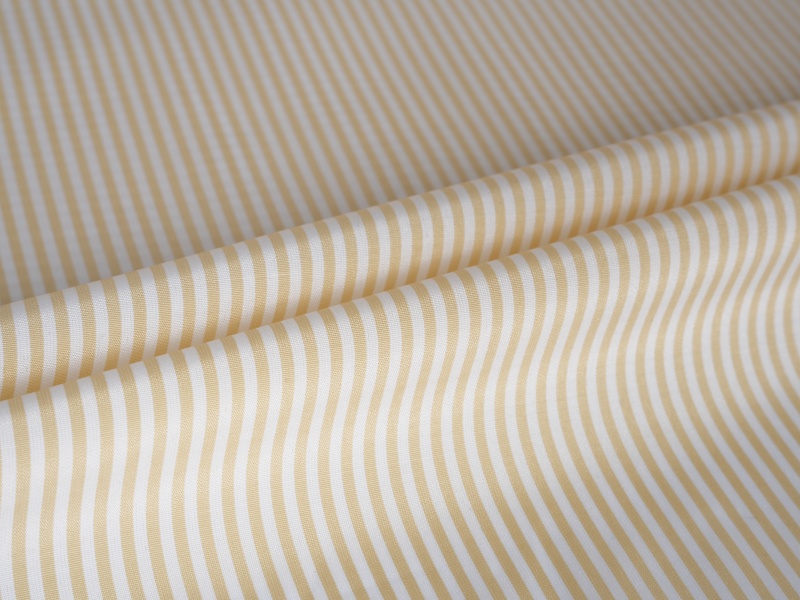
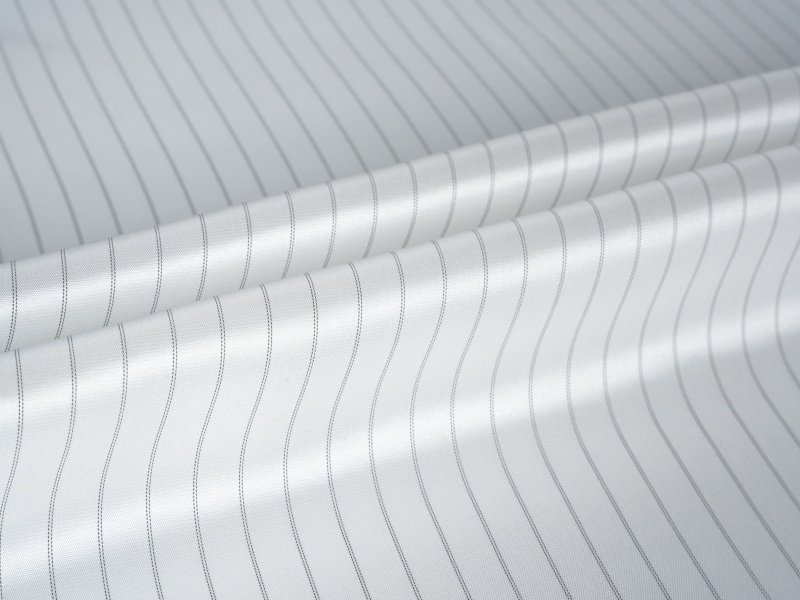
The clearest visual advantage of yarn-dyed lining is stripe clarity. Traditional sleeve linings often use narrow stripes, windowpanes, or micro-checks to signal tailoring quality. Yarn dyeing delivers these patterns with sharp edges because the weave structure controls the color placement. In a yarn-dyed fabric, a stripe is formed by an individual colored yarn, so the line remains clean even under magnification.
If the same stripe is attempted through piece dyeing, the fabric must be printed or coated after weaving. The result is often softer edges, reduced precision, and poor color separation over time. This is why a yarn-dyed sleeve lining fabric remains the first choice for designers who want consistent stripe geometry and contrast.
Luxury aesthetics is not only about the face fabric. When the wearer bends an arm, the sleeve lining becomes visible. A clean stripe, a subtle sheen, and a smooth surface create the impression of a considered garment. Yarn-dyed polyester-viscose linings have a quiet, elegant luster. The color appears to sit inside the yarn, giving the fabric depth instead of a flat printed look.
From the designer’s point of view, yarn-dyed linings continue to look refined after dozens of wears. The pattern stays intact, the colors do not bleed, and the fabric retains its tailor-friendly structure. This engineering subtlety is exactly what premium brands expect from a sleeve lining.
In fine tailoring, the sleeve lining is the only fabric the wearer sees while the jacket is being worn.
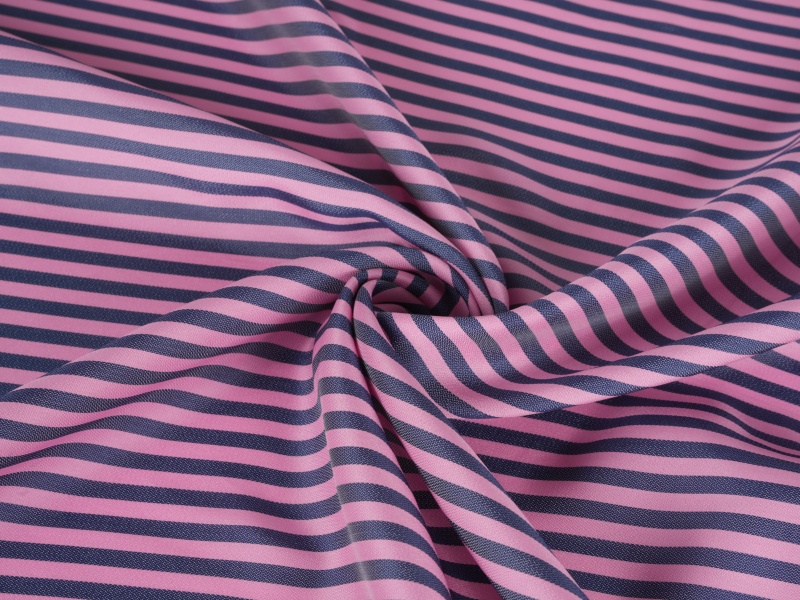 Polyester Viscose Yarn-Dyed Sleeve Lining Fabric for Premium GarmentsThis yarn-dyed lining combines polyester's durability with viscose's softness and breathability. Its deep-set colors and uniform hand feel make it a refined choice for high-end jackets and suits requiring lasting elegance.View Product →
Durability means more than abrasion resistance. A sleeve lining must survive repeated dry-cleaning, sharp wear from watch straps and rings, and the constant flexing of the elbow. Yarn-dyed construction helps the fabric keep its pattern and hand feel through this cycle. Even if the surface begins to pill slightly, the color remains uniform because the yarn core is dyed.
Blends of polyester and viscose add strength and breathability. The yarn-dyed route typically uses higher-grade yarns, since color uniformity requires careful quality control before weaving. This also reduces the risk of static cling and improves moisture comfort. For brands that service their customers over years of use, these practical advantages are essential. That is why premium brands are moving toward yarn-dyed sleeve linings.
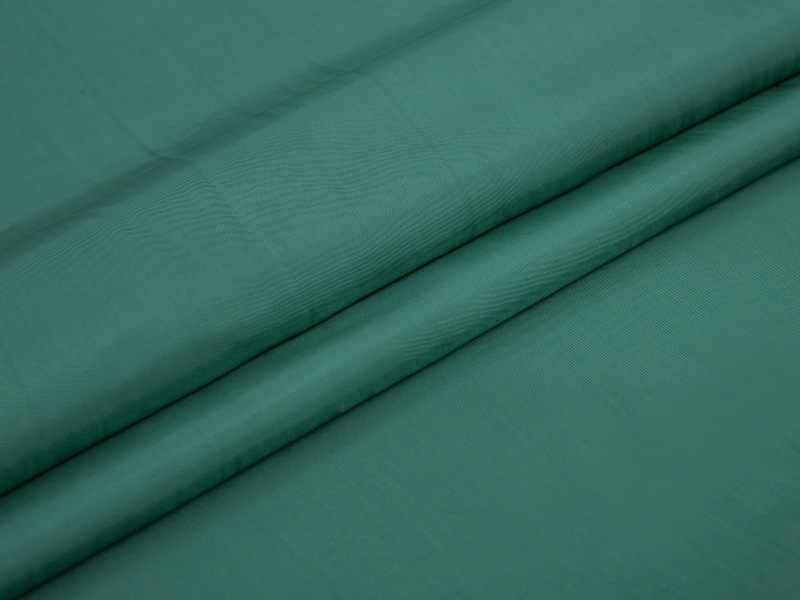
 Polyester Yarn-Dyed Sleeve Lining Fabric with Strong Color StabilityA colorfast, wrinkle-resistant lining ideal for striped or premium garments. Yarn-dyed construction ensures pattern integrity and reduces static, offering a dependable option for brands focused on long-term wear and consistent appearance.View Product →
Choosing between yarn-dyed and piece-dyed lining depends on the position of the garment. If the requirement is a solid color, a short production schedule, and a lower price point, piece-dyed lining is an acceptable workhorse. If the garment has any stripe pattern, a demand for color stability, or a premium brand image, yarn-dyed sleeve lining fabric is the safer investment.
Yarn-dyed sleeve lining fabric is made from yarns that are dyed before weaving, usually in polyester, viscose, or polyester-viscose blends. This method creates sharp stripes, checks, and decorative patterns with strong color penetration.
For color fastness, stripe clarity, and a premium feel, yarn-dyed lining is better. Piece-dyed lining is faster and more economical for solid colors but cannot match the pattern precision and color durability of yarn-dyed fabric.
Normally yes. Yarn dyeing requires extra steps, higher-quality yarns, and tighter production control. The added cost is justified when the final garment needs durable, long-lasting sleeve linings.
No. A piece-dyed fabric can be printed to suggest stripes, but the printed lines will lack the sharpness, depth, and abrasion resistance of true yarn-dyed construction. Over time, printed patterns tend to fade or lose definition.
In the comparison between yarn-dyed sleeve lining fabric and piece-dyed lining, the cloth choice is one of the earliest quality decisions in jacket making. For brands that need color fastness, precision stripe patterns, and a quiet luxury finish, yarn-dyed construction is not a premium extra. It is the engineering fabric that protects the beauty of the jacket long after it leaves the factory.
Copyright © Tongxiang Shunli Textile Technology Co., Ltd. All Rights Reserved.Custom Clothing Lining Fabrics Manufacturers
